A sticky leather sofa is one of the most common complaints we hear, and it almost never means the sofa is dirty in the ordinary sense. Stickiness on leather is usually a sign that something has built up on the surface (conditioner, polish, furniture spray, body oils) or that the protective finish itself is starting to break down. Which one it is matters a great deal, because the fix for the first is a proper clean and the fix for the second is restoration.
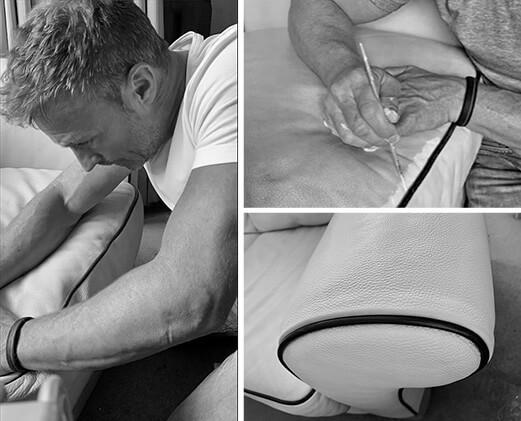
We look at sticky and tacky leather sofas across Essex and London every week from our base in South Benfleet. Jon, our founder, has been sorting them out for 26 years, and in this post he explains the main causes, why the usual household attempts tend to make things worse, and what a professional actually does about it.
What Makes a Leather Sofa Feel Sticky
Leather in good condition should feel dry and smooth, with a slight natural warmth. When it starts to grab at your skin, drag against clothing or feel tacky to the touch on a warm evening, one of the following is usually going on.
Conditioner and polish build-up
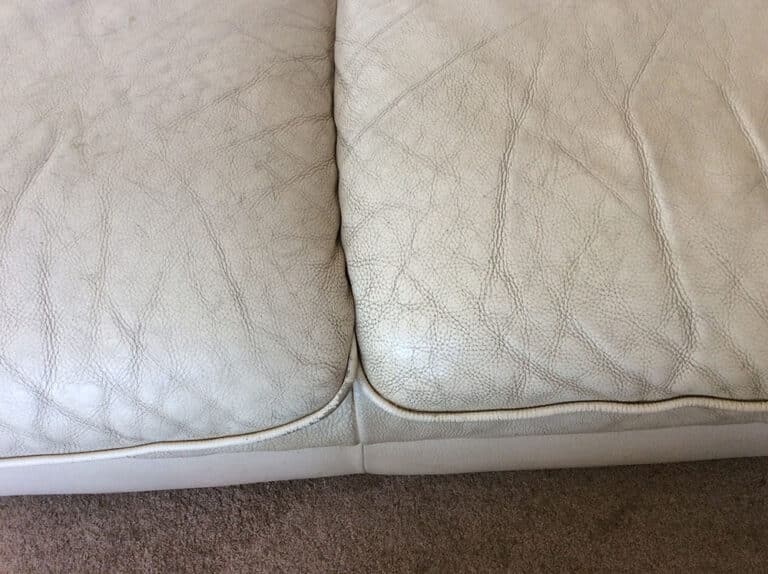
This is the number one cause. Most modern sofa leather is pigmented and sealed, which means the surface does not absorb anything. Every application of leather conditioner, balm, cream or “feed” simply sits on top of the topcoat. Do that every few months for a few years and there is a layer of softened, gummy product on the sofa that attracts dust and hair and never fully dries. The sofa in question has often been looked after more carefully than most, which is the frustrating part.
Body oils, hair products and sun cream
The head area of a sofa, the arms where hands rest, and the front edge of the seat all collect skin oils, hair oils and cosmetic residue. In summer, after-sun and sun cream join the mix. These sink into any tiny breaks in the finish and, over time, soften the surrounding topcoat so it becomes tacky. Dark, slightly shiny patches on the headrest and arms are the giveaway. Our leather head area restoration page deals with this particular problem.
A breaking-down finish
The clear protective topcoat on pigmented leather has a working life. Heat from a radiator or a conservatory, sunlight through a window, and years of cleaning with the wrong products all shorten it. As the topcoat degrades it can go from smooth to tacky, and eventually to a surface that peels or transfers colour onto clothing. This is not dirt and it will not clean off. It needs the old finish stabilised and a new colour and topcoat applied.
Bonded leather and faux leather
Some sofas sold as leather are bonded leather or a polyurethane coating on a fabric backing. The coating on these can go sticky as the plasticisers in it break down, especially on sofas that are a few years old and have been near heat. The stickiness is usually followed by peeling. We can advise on what is realistic for these, but it is a different situation from a genuine hide.
Humidity and heat
Sofas in conservatories, garden rooms and flats with poor ventilation in east London are more prone to feeling tacky in warm, humid weather. The surface picks up moisture from the air and any residue on it softens. This on its own is not serious, but it makes every other cause worse.
Why Cleaning a Sticky Leather Sofa at Home Usually Backfires
The instinct when a sofa feels sticky is to clean it, and the second instinct is to condition it afterwards. Both tend to go wrong.
Washing-up liquid, multi-surface sprays and baby wipes are all designed for surfaces very different from a leather topcoat. They cut through the sticky layer, which feels like progress, but they take some of the protective finish with it. A week later the sofa is duller than before and the stickiness has come back in patches, because the residue was only smeared around rather than lifted. Vinegar and water, a favourite of online forums, is acidic enough to dull the finish and can leave the leather smelling for days.
Applying more conditioner after cleaning is the classic mistake. If build-up was the problem, adding another layer puts you straight back where you started. If the topcoat was failing, conditioner soaks into the breaks and speeds up the breakdown. Jon has lost count of the number of sofas in Basildon and Romford that have been conditioned into stickiness by owners doing their best to look after them.
Solvent-based products, including some “leather restorers” sold online, can strip colour along with the residue. On a black or dark brown sofa that leaves visible pale patches that then need professional recolouring.
How We Deal with a Sticky Leather Sofa
The first thing we do is work out which of the causes above applies, because that decides everything else. Jon will usually want to see photographs of the affected areas in daylight, and he will ask what has been used on the sofa over the years. There is no judgement in that question; it just tells us what we are dealing with.
If the cause is build-up, the answer is a proper deep clean. Our leather sofa cleaning service uses cleaners designed to lift years of product and body oils out of the grain without stripping the finish. The sofa is cleaned section by section, residue is removed rather than moved around, and the leather is left with the right protection for its type. On a pigmented sofa that is a breathable protective cream, not a heavy conditioner. The difference in feel is immediate.
If the finish has started to degrade, cleaning alone will not solve it. The affected panels are cleaned and prepared, any tacky or lifting topcoat is stabilised, the colour is matched and reapplied where it has thinned, and a new sealant and topcoat are applied to bring back a dry, smooth surface. This is more involved but it deals with the cause rather than the symptom. For sofas where the whole surface has gone, that becomes a full leather restoration job rather than a repair to one or two panels.
Where the sticky areas are also badly discoloured, typically the headrests and arms, we blend the colour back in at the same time so there is no visible difference between the treated and untreated leather.

Keeping the Sofa from Going Sticky Again
We are not going to give you a cleaning routine, because the right one depends on the leather type and we would rather advise you in person. But the general principles are simple. Less is more with leather care products; most pigmented sofas need far less conditioning than the bottle suggests. Keep the sofa out of direct sun and away from radiators where you can. And if the sofa is in a warm, humid room, give it some ventilation.
If you are considering a new sofa because the old one has become unpleasant to sit on, it is worth knowing that a sticky finish on a genuine leather sofa is nearly always fixable. Independent guidance from Which? on choosing and caring for leather furniture is useful reading, but in our experience a good quality sofa that feels tacky is rarely a lost cause.
When a Sticky Sofa Is Not Worth Treating
The honest exception is bonded or faux leather that has gone sticky across the whole seating area and has started to peel. The coating cannot be cleaned back to health, and recolouring it is only ever a temporary measure. In those cases we will tell you, and you can decide whether to replace it or to have new panels fitted where the sofa is otherwise sound.
For a genuine leather sofa, even one that has been conditioned into a sticky, dusty mess over a decade, the answer is almost always yes, it can be sorted.
Get a Free Quote to Fix Your Sticky Leather Sofa
Send us two or three photographs of the sofa: one of the whole piece and a couple of close-ups of the areas that feel tacky, taken in daylight. If you know what products have been used on it, mention them. Let us know roughly where you are, whether that is Southend-on-Sea, Chelmsford, Colchester, Thurrock or somewhere in London.
Call Jon on 07967 216250 or fill in the enquiry form below this post. You can read more about our leather sofa cleaning service before you get in touch. Quotes are free and Jon will tell you straight whether your sofa needs a clean or something more.