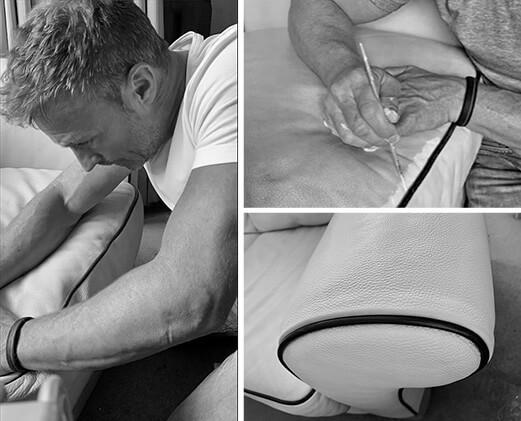
Yes, you can replace a panel on a leather sofa, and in many cases it is the best repair there is. A sofa is not one sheet of leather. It is built from separate pieces (seat platforms, seat cushion tops and sides, inside arms, outside arms, backs and borders) that are cut, sewn and fixed individually. When one of those pieces is beyond saving, we can cut and fit a new one in matching hide while leaving the rest of the sofa untouched. Our replacement leather panels service does exactly this across Essex and London, and this post explains when it makes sense, how it works and what to expect.
When a New Panel Beats a Repair
Most leather damage can be repaired in place. Scuffs, small tears, cat scratches, colour loss and cracking on the surface are all fixed with fillers, sub-patches, pigment and lacquer, and the results are excellent. But there is a point where repairing a panel stops being sensible, and Jon, our founder, has spent 26 years learning where that line is.
A panel usually needs replacing when the leather itself has failed rather than just the finish. Typical examples we see around South Benfleet, Rayleigh and Billericay include:
- A seat cushion where the leather has cracked all the way through in several places, so any repair would just crack again next to it.
- A large tear or split, often on a seat front or arm, where the leather around it is thin, dry and tearing under the slightest pull.
- Bonded or bicast “leather” where the surface has peeled and there is nothing left to repair.
- Dog damage where a whole corner has been chewed away.
- A burn or chemical spill that has gone right through the hide.
- An arm that has been rubbed bare by years of use and has stretched and gone baggy.
In every one of these cases, patching would either look wrong or fail quickly. A new panel gives you sound leather that will last another decade or more.

How We Replace a Panel on a Leather Sofa
People imagine a replacement panel as a patch stuck on top. It is nothing like that. We take the damaged piece out and put a new one in, following the same construction the manufacturer used, so the result is a sofa that has been remade in that area rather than mended.
Stripping and using the old panel as a pattern
The first job is to carefully open the relevant seams and remove the old panel, keeping it intact wherever possible. That old piece is the pattern for the new one. It tells us the exact shape, the seam allowances, where the piping runs and how the leather was tensioned. Skipping this step and guessing the shape is why cheap repairs end up with wrinkles, puckered corners or a seat that sits differently from its neighbour.
Choosing and matching the hide
This is where the skill really lies. Leather varies enormously in thickness, grain pattern, softness and sheen. A new panel cut from the wrong hide will stand out even if the colour is spot on. We source hides that match the weight and grain of your sofa, and where the sofa has aged we can choose or finish the new leather so it sits alongside the old rather than shouting “new”. On a sofa with a very distinctive grain, such as some Italian and Chesterfield styles, this can take a bit of searching, and we will be honest with you about what is achievable.
Colour matching
Almost no sofa is still the colour it was in the showroom. Sun through the conservatory windows, body oils on the arms and general wear all shift the shade. We colour match the new panel by eye to the sofa as it is today, using leather pigments mixed on site, and we can also freshen the surrounding panels so everything blends. If the whole sofa is tired, replacing one panel and recolouring the rest at the same time often gives the best result for the money.
Cutting, sewing and fitting
The new panel is cut, sewn with the correct thread weight and stitch pattern (including any piping or top-stitching) and fitted back into the sofa using the original method, whether that is stapled to the frame, sewn into a cushion cover or zipped. Where padding underneath has flattened or crumbled, we replace that too, so the new panel sits properly. You can read more about full re-covering on our leather sofa reupholstery page, which is the same craft applied to the whole piece.
Why Online Patch Kits and Iron-On Repairs Go Wrong
Before people find us, many have tried a self-adhesive leather patch, an iron-on repair sheet, or a tube of “leather glue” from a marketplace listing. We understand why, and we understand the disappointment that follows.
A patch stuck on top of a seat is under constant flex. Every time someone sits down, the edges lift a little more until they curl and collect dirt. The adhesive often reacts with the leather finish and leaves a dark, tacky ring that is very difficult to remove. Iron-on products need heat, and heat on a pigmented leather finish tends to shrink and glaze it, so a small tear becomes a shiny, hard patch with the tear still visible in the middle.
Superglue is the worst offender. It soaks into the hide, sets rock hard, and then cracks along with the leather. When we come to fit a replacement panel afterwards, the glued area has to be cut back further to find sound leather, which makes the job larger than it needed to be. If your sofa is damaged, the kindest thing you can do for it is leave it alone and send us a photo.
Which Panels Are Replaced Most Often
Seat cushions top the list by a distance. They take all the weight, all the friction and, in a busy family home in Basildon or Thurrock, all the spills. A seat cushion cover is also one of the easier panels to replace because it is usually a separate, zipped or sewn cover that comes off the foam. We often replace the top face of the cushion only, keeping the original sides and borders where they are fine.
Arms come next. Inside arms wear where forearms rest and where people perch, and the leather there is often the first to crack. Outside arms get kicked by vacuum cleaners and scratched by cats. Both are fixed to the frame and are a little more involved than a cushion, but still very much a routine job for us.
Backs and headrests are usually replaced because of sun fade or hair oil darkening rather than tearing. Seat fronts and borders get replaced after dog damage or where a split has run along a seam. We can also replace a single leather panel on a car seat, an office chair or a dining chair using the same approach, but sofas are what we do most.
What Affects the Cost and How Long It Takes
Every job is quoted individually, and quotes are free, so treat the following as a guide to what Jon is weighing up rather than a price list.
The main factors are the size and shape of the panel, how it is fixed into the sofa, the type and quality of the replacement hide, how much colour work is needed on the surrounding leather, and whether the job can be done at your home or needs to come into our workshop. A single seat cushion top on a standard three-seater is a very different job from a whole outside arm on a hand-built Chesterfield with deep buttoning.
As a rough guide, replacing one or two panels is usually a fraction of the cost of reupholstering the whole sofa, and a small fraction of buying a comparable new one. Timings depend on sourcing the right hide: a good colour and grain match can sometimes be done from stock, and sometimes we need to wait for the right leather to arrive. Jon will tell you at the quoting stage.
When Replacing a Panel Is Not the Right Answer
We would rather turn a job down than do one that will not last. There are a few situations where we will say so.
If the whole sofa is made of bonded or bicast leather and it is peeling everywhere, replacing one panel just moves the problem along. The rest will follow within months. In that case we will suggest either full reupholstery in real leather or, honestly, that the money is better spent elsewhere. If your sofa is still under guarantee or fairly new and the leather has failed early, it is also worth checking your rights first: Citizens Advice has clear guidance on faulty furniture and what retailers are obliged to do.
If the damage is a single tear or split in otherwise good leather, a panel is usually overkill. Our leather split and tear repair service will sort that in place, at your home, for a good deal less. Jon will always recommend the smaller job where it will genuinely hold.

Get a Quote to Replace a Panel on a Leather Sofa
If you think you need to replace a panel on a leather sofa, send us two or three photos: one of the damage close up, one of the whole sofa so we can see the style and construction, and if possible one of the label or a note of the brand. Let us know roughly where you are, whether that is Southend-on-Sea, Chelmsford, Romford or anywhere across Essex and London, and Jon will come back to you with an honest opinion and a free quote.
Call Jon on 07967 216250 or fill in the enquiry form below this post. You can also see examples of finished work on our replacement leather panels page.