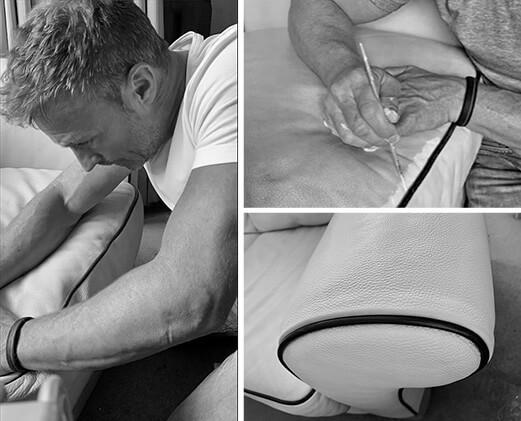
Motorhome and caravan leather seats can be repaired, and in most cases they can be repaired in situ on your drive, at the storage yard or on the pitch, without stripping the vehicle. Cracked driver’s seat bolsters, faded lounge cushions, cat scratches on the dinette, a cigarette burn on the swivel seat or split seams on a well-used sofa bed are all jobs we take on regularly. Because these vehicles combine the demands of a car interior with the demands of a living room, they suffer from a particular mix of problems, and this post explains what they are and how a professional puts them right.
Why leather in a motorhome or caravan wears differently
The leather in a motorhome cab is doing the same job as leather in a car: it takes the driver’s weight, it is dragged across every time someone climbs in or out, and it sits behind a large windscreen that turns the cab into a greenhouse on a sunny day at a site in Suffolk. The seat bolster on the driver’s side and the outer edge of the passenger seat take the worst of it.
The habitation area is more like a home, but a home that is left unheated and shut up for months over winter, then used intensively for a fortnight in August. Leather does not enjoy that pattern. Cold, damp storage over winter lets the hide absorb moisture and encourages mould on the surface; summer heat and UV through the big side windows and roof lights then dry it out and fade it. The Met Office UV index is a useful reminder that a vehicle parked in full sun through a British summer is exposed to more ultraviolet than most living rooms see in a year. Cushions that double as bed bases get folded, flipped and slept on, so the seams and the edges of the foam show through the leather far sooner than they would on a sofa at home.
Caravan lounges suffer particularly from fading on the side that faces the window on the awning side, since that is the way they are usually pitched, and from wear on the front edge of the seats where legs rub against them at the table. Jon has looked at a great many caravans on pitches and storage compounds around Southend-on-Sea, Canvey Island and the Essex coast, and the pattern is remarkably consistent.
Common problems with motorhome and caravan leather seats
Cracked and worn bolsters in the cab
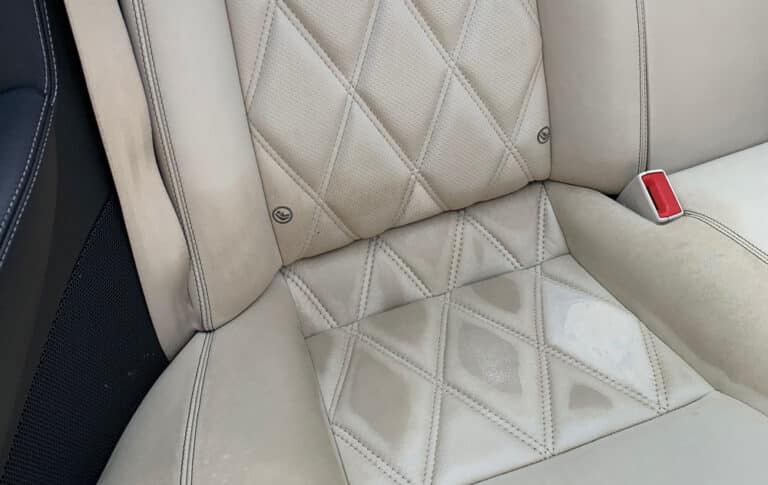
The classic problem on Fiat Ducato and Peugeot Boxer based motorhomes, and on any conversion with leather or part-leather cab seats. The outer bolster of the driver’s seat loses its colour first, then the finish cracks in a network of fine lines, and eventually the leather splits along the crease. Caught early, this is a straightforward colour and finish restoration. Left until it splits, it needs sub-patching and filling before the colour can go back on.
Fading and colour loss in the lounge
Cream and pale grey leathers, which are popular in modern motorhome interiors because they make the space feel bigger, show fading less obviously than dark colours but they collect dirt and body oils, which make them look grubby and uneven. Dark browns and tans go orange on the window side. In both cases the finish can be cleaned, rebuilt and sealed to bring the whole seating area back to one shade.
Split seams and worn piping
Seat and cushion covers in a caravan are opened, folded and slept on constantly, and seams are the weak point. Threads perish in the sun, stitching gives way and piping rubs bare. This is a stitching job rather than a colour job, and it is often done in combination with a colour refresh so the cushion looks uniformly good afterwards.
Scratches, burns and stains
Many owners travel with dogs, and a spaniel scrambling onto the front dinette seat leaves the same claw marks as on a sofa at home. Barbecue and cigarette burns turn up on the swivel seats and on the arm nearest the door. Sun cream, red wine and coffee stains are common on lounge cushions. All of these are localised repairs that can be done without removing the seat. Where a claw or a split has gone right through the hide, our leather split and tear repair process backs and fills the damage before the colour work.
Mould and mildew marks
Winter storage in a damp compound or under a cover that traps moisture leaves grey-green spotting on leather cushions and a musty smell. Surface mould can be professionally cleaned off, but if it has been left for a season or two it can permanently mark the finish, and the affected area then needs recolouring.
Why the usual home fixes cause trouble
Caravan and motorhome owners tend to be practical people, and there is a strong temptation to sort a problem with what is in the locker. Unfortunately the products that usually come to hand are the wrong ones. Dashboard shine sprays and vinyl protectants leave a silicone film on leather that looks glossy for a week, attracts dust and prevents any proper repair from bonding. Car upholstery cleaners are often too harsh for leather finishes and strip colour along with the dirt.
Repair kits and colour pens suffer from the same problems as they do at home: generic colours that do not match, rigid filler that cracks on a seat that flexes and folds, and no proper sealing coat. A driver’s bolster that has been touched up with a pen tends to rub the colour onto trousers within days. Jon spends a fair amount of time stripping these attempts before the real repair can begin, which adds to the cost. If in doubt, leave it alone and send us a photo.
How we repair motorhome and caravan leather seats
Our leather car seat repair service covers cab seats, and the same techniques and materials are used throughout the habitation area. Jon starts by identifying the leather type (some motorhome interiors are part-leather with vinyl side panels, and some “leather” caravan lounges are actually a good quality PU, which changes the approach) and assessing each area of damage.
The leather is deep cleaned to remove body oils, sun cream, silicone sprays and anything else that would stop the new finish bonding. Cracks and splits are stabilised, backed if necessary and filled in thin, flexible layers so the repair moves with the seat rather than sitting on top of it. Worn seams are re-stitched. The colour is then mixed to match the existing leather, tested on a hidden area, and applied in light coats so the grain still shows through. A flexible protective top coat is applied last, with the correct sheen for a vehicle interior and UV protection to slow the next round of fading.
Where the whole lounge or cab has lost its colour, a full leather recolouring of every panel gives the most even result and is often better value than chasing individual patches. It is also a chance to lift a dated colour: a tired 1990s beige can become a modern grey, for example, provided the underlying leather is sound.

Where the work is done
Most of it happens wherever the vehicle is. We work on driveways across Essex and into London, at storage yards, and on site at caravan parks along the Essex coast when that is easier. Habitation cushions are usually loose and can be worked on in the vehicle or on a table beside it. Fixed cab seats are repaired in place. Only occasionally, for a full recover of a seat or a cushion set, does anything need to come to our workshop in South Benfleet.
If you are planning work before the season starts, it is worth booking early. Spring is a busy time as owners get vehicles out of storage and find what the winter has done to them.
When repair is not the right option
Leather that has been baked and frozen for twenty years can become brittle enough to tear under light finger pressure. If the hide itself has gone, colour and filler will not hold, and the honest answer is a replacement panel or a full recover of the cushion. The same applies to PU lounge seating that has begun to peel: that is the material failing, and it needs replacing rather than repairing. Jon will tell you which situation you are in before any work starts.
Get a quote for your motorhome or caravan seats
Send us two or three photos of each damaged area in daylight, plus a shot of the whole cab or lounge so we can see the layout, and let us know where the vehicle is kept. We cover Essex, London and the surrounding area, and we are happy to visit storage compounds and sites as well as home addresses.
Call Jon on 07967 216250 or fill in the enquiry form below this post. There is more about our vehicle work on the leather car seat repair page, and every quote is free and without obligation.