When a leather sofa smells and no amount of airing the room shifts it, the smell is almost never in the leather itself. It is in what is underneath: the foam, the fibre wrap, the webbing and the dust that has collected inside the frame over the years. That is why a spray on the surface makes the room smell of lavender for an afternoon and then the sofa smells exactly as it did before. The good news is that most odours can be removed professionally, and our leather sofa cleaning service deals with them across Essex and London every week. This post explains where the smell is coming from, why the usual fixes fail and what actually works.
Where the Smell Is Really Coming From
Leather is a surprisingly clean material. A finished leather surface does not absorb much, so smells rarely sit in it for long. The trouble is that a sofa is a leather skin over a large sponge. Seat cushions, back cushions and arm pads are foam and polyester fibre, both of which soak up liquid and hold odour for years. Under the seats there is often a layer of dust, crumbs, pet hair and dried spills that has fallen through the gaps.
So when we are asked why a leather sofa smells, the answer is usually one of these:
- Pet urine. Dogs and cats mark, older animals leak, and a small accident on a cushion soaks straight through the seam into the foam.
- Sweat and body oils. The seats and headrest of the favourite end of the sofa absorb years of skin oils and perspiration, which turn rancid over time and also darken the leather.
- Smoke. Cigarette and wood-burner smoke settles on every surface and sinks into fibre and foam.
- Damp and mould. A sofa against a cold outside wall, in a conservatory or in a flat with condensation problems can develop a musty smell and, in bad cases, visible mould spots on the leather.
- Milk, sick and food. Anyone with small children or a Friday night takeaway habit knows this one. Milk in particular goes off inside the cushion and lingers for months.
- New sofa chemical smell. Some new sofas, especially cheaper ones, give off a sharp chemical odour from adhesives and finishes for the first few weeks.
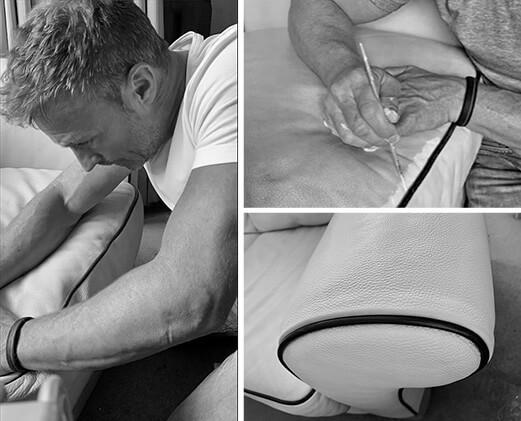
Jon, our founder, has been into hundreds of homes from Canvey Island to central London where the family had stopped using the sofa altogether because of the smell, and in nearly all of them the leather was fine. The problem was inside.
Why Sprays, Bicarb and Vinegar Do Not Work on Leather
The internet’s advice for a smelly sofa is written for fabric, and it does real harm on leather.
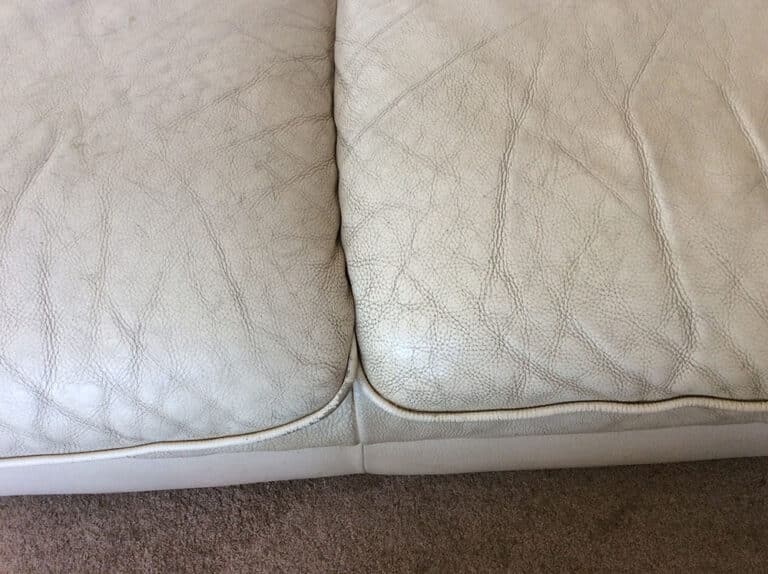
Fabric fresheners and odour-neutralising sprays are water-based and sit on top of a leather finish. They cannot reach the foam where the smell lives, and repeated use leaves a sticky residue that attracts dirt and dulls the surface. We can always tell a sofa that has been sprayed weekly: the seats have a grey, slightly tacky bloom to them.
Bicarbonate of soda sprinkled over the seats is a classic. It absorbs a little surface moisture, but it also draws the natural oils out of the leather, leaving it dry and prone to cracking, and the fine powder works into the grain and seams where it is very difficult to remove. Vinegar is acidic and softens pigmented finishes, so after a few applications the colour starts to lift on a cloth. Both remedies also do nothing about the foam.
Then there are the enzyme pet-odour cleaners. These are good products on carpet, but poured through a leather seam they saturate the foam, which then takes days to dry inside a sealed leather cover. Wet foam in a warm room is how you get mould, so the pet smell is joined by a damp one.
With pets, it is also worth understanding why the sofa was chosen in the first place. Charities such as Blue Cross explain that cats and dogs return to a spot that already carries their scent, so a half-cleaned cushion invites a repeat. That is a strong argument for having the odour dealt with properly rather than masked.
How We Remove Odours From a Leather Sofa Professionally
There is no single trick. We look at where the smell is and treat each part of the sofa accordingly, which is why the results last.
Cleaning the leather surface
We start with a deep clean of every leather surface using cleaners made for the specific finish on your sofa, working the grime out of the grain, the seams and the piping rather than pushing it around. Smoke residue, body oils and old spray build-up all come off at this stage, and the leather is then conditioned and, where the finish has worn, re-sealed. If a spill has stained as well as smelled, our leather stain removal work is done at the same visit.
Dealing with what is inside
This is the step that makes the difference. Cushion covers are opened and the foam and fibre inspected. Lightly affected foam can sometimes be treated and dried properly outside the cover. Foam that has been soaked in urine, milk or damp is replaced, because there is no honest way to get that smell out of an open-cell sponge. New foam also gives you back the support that old cushions lost years ago. You can read more on our new foam cushions page.
We also clear out the frame. Lifting the seat cushions and getting into the base with the right equipment removes the layer of hair, crumbs and dust that has been quietly contributing to the smell since the sofa was delivered.
Mould and damp
Where a sofa has been in a damp room, mould spores can sit on and in the leather as well as in the padding. We treat the leather with a suitable anti-microbial product, clean off any spotting, and advise on the room itself, because a sofa put back against the same cold wall will simply do it again. Improving ventilation and heating in the room matters as much as the cleaning, and we will happily say so when we see the sofa.
Head Areas, Arms and the Smell of Skin Oils
One smell deserves its own mention because it goes hand in hand with visible damage. The headrest and the arms of a well-used sofa absorb hair products, skin oils and sweat. Over the years the leather in those spots goes dark, shiny and slightly sticky, and it develops a stale, sour smell that no surface wipe removes. The oils have soaked through the finish into the hide.
These areas need to be degreased properly, and once the oils are out the finish usually needs restoring because the colour has broken down. We do this as part of our head area restoration service, and it is often the single most noticeable improvement on an older sofa, in both look and smell.
How Long It Takes and What Affects the Work
A straightforward deep clean of a smoky or grubby sofa is usually a single visit to your home, and the sofa can be used again once the leather has dried, normally the same day or the next morning. Jobs that involve replacing foam take a little longer because we measure, cut and fit new cushions to the original covers.
The main things Jon weighs up when quoting are the size of the sofa, how many cushions are affected, whether foam needs replacing, whether there are stains or worn areas that need colour work, and whether the sofa can be done in your living room in Chelmsford or Romford or is better brought into the workshop. Every job is quoted individually, and quotes are free.
When a Smell Means the Sofa Is Past Saving
Not often, but it happens. If urine has repeatedly soaked into a fixed seat platform and the webbing and wooden frame underneath have absorbed it, cleaning alone will not solve it and the base may need rebuilding. If the sofa is bonded leather that is also peeling, the money is usually better spent elsewhere. Jon will tell you straight rather than sell you a clean that will not work.
In the majority of cases, though, a sofa that smells is a sofa that has been lived on, and a proper clean and fresh foam bring it back completely.

Get a Quote if Your Leather Sofa Smells
If your leather sofa smells and you would like it sorted rather than masked, send us a couple of photos of the sofa, tell us what you think caused the smell (pet, smoke, damp, a spill) and let us know roughly where you are in Essex or London. Jon will tell you what is likely to be involved and give you a free quote.
Call Jon on 07967 216250 or fill in the enquiry form below this post, and find out more about our leather sofa cleaning service.