Leather sofa colour fading happens when ultraviolet light, heat and everyday wear break down the pigment and protective top coat on the surface of the hide, and it is almost always fixable. The colour on a modern leather sofa sits in a finish on top of the leather rather than running all the way through it, which is exactly why a faded sofa can be cleaned, prepared and recoloured to look as it did when it was new. Our sun bleached and faded leather repair service does this for sofas, chairs and footstools across Essex and London.
This post explains what causes the colour to go, why some sofas and rooms are far worse than others, why colour balms and dye kits tend to disappoint, and what a proper recolour involves.
What Causes Leather Sofa Colour Fading
Sunlight is the main culprit
UV light breaks the chemical bonds in the pigments used to colour leather, and it does the same to the clear lacquer that protects them. Because the damage is cumulative, a sofa does not need to be in blazing sun to fade. Bright indirect light through a large window every day for a few years is enough. Glass blocks some UV but not all, and a conservatory or a room with a big south or west-facing window gets the worst of it.
Jon, our founder, sees the same pattern week after week: a sofa in a bay window in Leigh-on-Sea or Westcliff where the back and one arm have gone two shades paler than the seat cushions, or a conservatory suite in Billericay that has faded evenly all over so the owner only noticed when they moved a cushion. The Met Office publishes UV forecasts for the UK, and in summer the levels are enough to fade a light-coloured hide within a couple of seasons.
Heat and dry air
Radiators, underfloor heating and wood burners dry out the hide and make the finish brittle. A dry finish loses its sheen and looks paler and duller even before the pigment has gone. The combination of sun and heat, which is what you get in a conservatory, is the fastest route to a faded sofa there is.
Wear and cleaning products
The arms, the front edge of seat cushions and the headrests fade through friction. Every time a sleeve rubs across an arm or someone slides off the front of a seat, a little of the finish is worn away. Household cleaners, baby wipes and polishes speed this up dramatically because they dissolve the top coat a little more each time. Grease from hands and hair darkens some areas while the rest fades, which is why a tired sofa often looks patchy rather than uniformly pale.
The leather itself
Aniline leather, which is dyed right through and has little or no protective coating, fades faster and more noticeably than pigmented leather. It also fades beautifully, in the way an old saddle does, and some owners like that. Pigmented leather, which is most sofa leather, holds colour longer but when it fades the effect is a chalky, washed-out look rather than a gentle patina. Lighter colours (cream, pale grey, tan) show fading sooner than dark browns and blacks, and reds and oranges are notoriously unstable in sunlight.
Why Fading Is Not Just Cosmetic
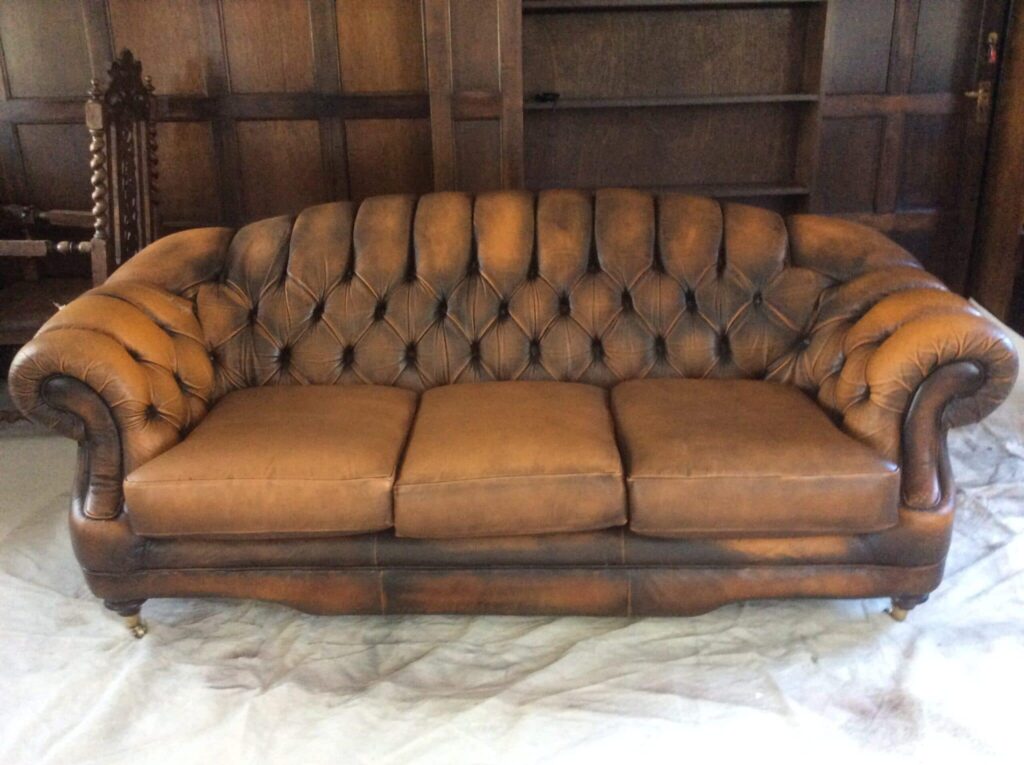
Colour loss is the visible symptom of a finish that is breaking down. Once the top coat has gone, the pigment beneath is exposed and wears faster, and the hide itself starts to dry out. That is the point at which fading turns into cracking. A faded sofa caught early is a straightforward recolour. A faded sofa left for another few winters by the radiator is a recolour with a lot of crack filling first. The sooner it is dealt with, the simpler and cheaper the job.
The Home Fixes That Make Faded Leather Worse
There is a whole shelf of products aimed at faded leather, and most of them do more harm than good. Colour balms and “leather recolouring creams” are the most common. They are essentially tinted wax or oil that sits on the surface, darkens it temporarily, and then transfers onto clothing and cushions. They also stop professional pigments bonding, so they have to be stripped off before we can start.
Dye kits are the next problem. Most are the wrong colour for your sofa, most are applied over a surface that has not been properly cleaned, and most have no proper top coat, so the result rubs off or goes patchy within weeks. Olive oil, coconut oil, shoe polish and furniture polish all darken the leather unevenly and go sticky. Jon has stripped all of these off sofas in Basildon, Rayleigh and Romford before recolouring, and every one of them added hours to the job.
We would gently say this: if the sofa has faded, it needs its colour rebuilt properly, and no product from a supermarket shelf can do that.
How We Recolour a Faded Leather Sofa
The first job is to identify the leather and work out how far the finish has gone. Pigmented, semi-aniline, aniline and waxed leathers each need a different approach, and a sofa that has been recoloured before needs assessing to see how well the last coat has held.
The sofa is then deep cleaned to remove dirt, body oils, silicone and any products that have been applied. This is a much more thorough process than a wipe over and it is the foundation of the whole job. Any cracking, scuffs or worn patches are filled and smoothed so the new colour goes onto a level surface.
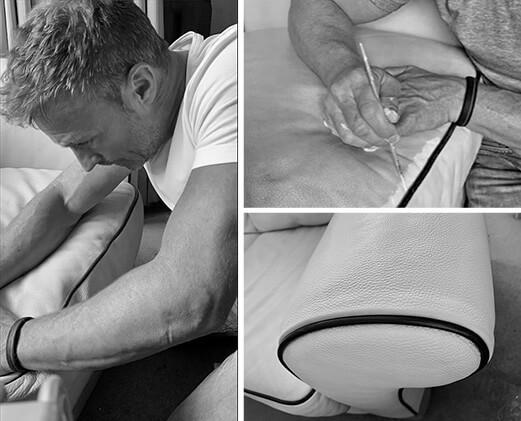
Colour is where the skill lies. Jon mixes the pigment in your room, comparing it against an unfaded part of the sofa (usually under a cushion or on the back) and adjusting under your own lighting. On a partially faded sofa the whole piece is usually recoloured so the finish is consistent, rather than trying to blend a faded arm into an unfaded seat. The colour goes on in thin coats, and a flexible sealant and lacquer in the right sheen finish the job so the surface is protected against the light and wear that caused the fading in the first place. You can read more on our leather sofa recolouring page.
Most recolouring is done at your home, typically in a day for a three-seater, and you can use the rest of the sofa while it dries. Where the fading comes with deep cracking, heavy wear or split seams, the job becomes a full leather restoration, which takes a little longer but brings the whole sofa back at once.
Changing the Colour While You Are At It
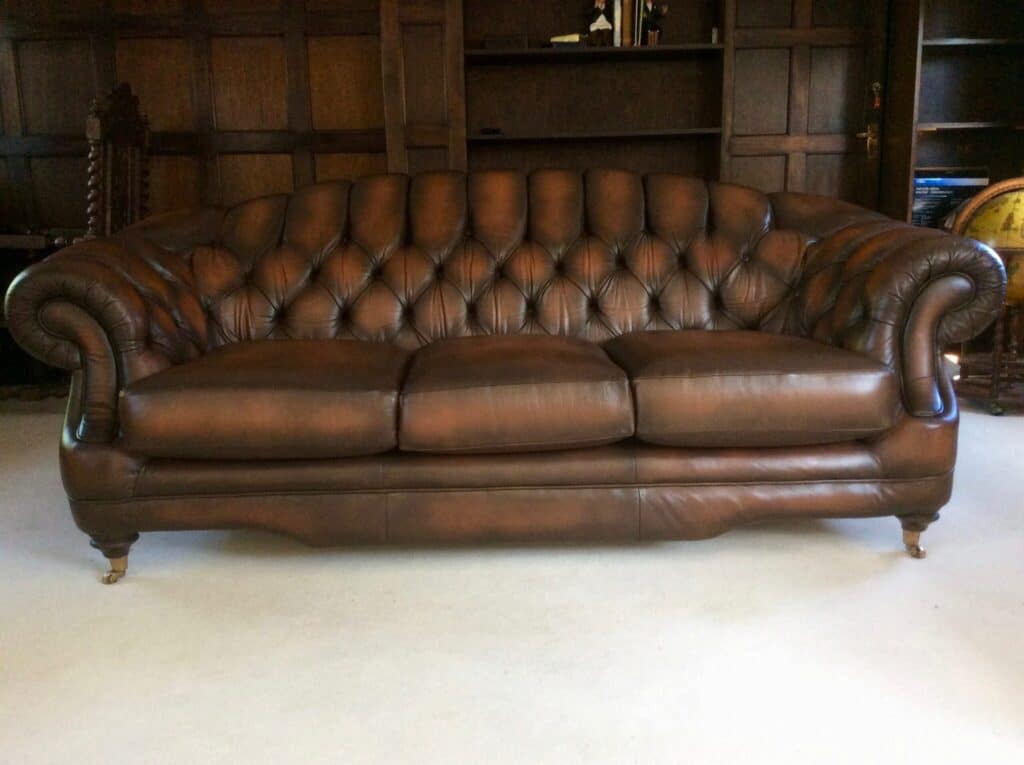
Because recolouring rebuilds the finish from the leather up, it is also the moment to change colour completely if you want to. A faded tan sofa can become a deep brown, a yellowed cream can go to grey, a dated red can become black. The process is similar and the cost is often not much more than a like-for-like recolour. It is a popular option for customers who like the sofa but have redecorated around it.
Keeping the Colour Once It Is Back
A recoloured sofa will fade again if it goes back to exactly the same spot in exactly the same conditions. Moving it a little further from the window, drawing a blind on the brightest afternoons, keeping it a foot away from radiators and having it professionally cleaned every year or two rather than wiped with household products will keep the new finish looking right for years. None of this is complicated, and we will talk it through with you when the work is done.
Get a Quote to Fix Leather Sofa Colour Fading
If your sofa has faded and you want it back to the colour it should be, send us two or three photos in daylight, including one of an area that has not faded (under a cushion is ideal) so we can see the original shade. Let us know roughly where you are. We cover Essex and east and central London from South Benfleet, including Southend-on-Sea, Chelmsford, Brentwood, Thurrock and the City.
Call Jon on 07967 216250 or fill in the enquiry form below this post. There is more on our sun bleached and faded leather repair page, and every job is quoted individually with no obligation.