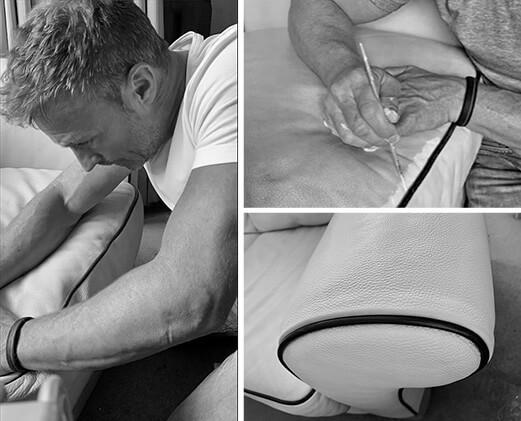
A leather protection plan is worth it for some people and a poor deal for others, and the difference comes down to how you live, what the plan actually covers and how much it costs against the price of the sofa. We are a leather repair business, not an insurer, so we have no plan to sell you. What we do have is 26 years of seeing what goes wrong with leather sofas in real homes across Essex and London, and a fair idea of which of those problems a plan would and would not have paid for.
This post walks through how these plans generally work, the kinds of damage that tend to be covered and excluded, and how the sums compare with paying for leather restoration as and when you need it. Read your own plan’s terms carefully, because they vary a great deal between retailers.
What a leather protection plan usually is
When you buy a leather sofa from a big retailer, you will often be offered a protection plan or “care plan” at the till. It typically involves a one-off payment on top of the sofa price, sometimes a treatment applied to the leather before delivery, and a policy that runs for a set number of years. If certain kinds of damage happen during that time, you make a claim and the provider arranges a repair or, if repair is not possible, a replacement or partial refund.
Some plans are underwritten insurance policies. Others are service contracts. Some are sold by the retailer directly and others by a third party, and it is not always obvious which you are buying. That matters if you need to complain later. Which? has published a good deal of consumer advice on extended warranties and protection products, and it is worth a read before you sign anything.
What these plans tend to cover
Broadly, most plans are built around accidental damage: a single, sudden, identifiable event. A glass of red wine knocked over. A biro that leaked. A cut from a pair of scissors. A burn from a dropped hair straightener. Jon, our founder, has done plenty of work on exactly these jobs, some of them paid for by plans and some paid for by the customer.
The important word is “accidental”. A stain has to have a date and a cause. A rip has to have happened, not developed. If your sofa arm has faded from three summers under the bay window in a Leigh-on-Sea front room, that is not an accident in the eyes of most plans.

What is usually left out
This is where a leather protection plan disappoints most people. In our experience, the problems that actually bring customers to us are mostly not accidents. They are the slow ones.
General wear and tear
Worn colour on the seat cushion everyone sits on. A shiny, pale arm where a hand rests every evening. Creasing and cracking on the front edge. These are the most common leather problems we see and they are almost always excluded as wear and tear.
Body oils, hair products and darkened headrests
The greasy, dark patch on the headrest and arms comes from skin oils and hair products building up over months. It is not sudden, so it is rarely covered, and yet it is one of the most frequent reasons people call us.
Sun fading and heat damage
A sofa in a conservatory in Billericay or under a south-facing window in Southend fades and dries out gradually. That is environmental damage rather than accidental damage, and most plans exclude it.
Pets
Some plans cover pet damage, many exclude it, and the ones that cover it often limit it to a single incident rather than three years of the cat using the arm as a scratching post. If you have a dog or cat, this is the clause to read first.
Damage you tried to fix yourself
Almost every plan we have seen requires you to report a stain quickly and not to treat it with anything other than what they specify. Wipe a stain with baby wipes or rub in a home remedy and you may find the claim rejected, and the wipes may have made the stain worse in the meantime.
Weighing up the cost
This is where you have to do your own sums, because we do not know what you were quoted. The plan price is usually a percentage of the sofa price, paid up front, for a fixed term. Against that, think about the kinds of damage you are realistically likely to have and what they would cost to put right.
As a rough guide only, a single localised repair such as a small cut, a burn or a stain on one cushion is a modest job and often costs less than people expect, especially when it is done in your home. Larger work, such as recolouring a full sofa that has worn over five or six years, is a bigger job but still usually a fraction of replacing a good quality sofa. Every job is quoted individually, and quotes are free.
The honest way to look at it is this. If you have young children, a dog, a busy household and a pale leather sofa, a plan that clearly covers accidental stains and pet damage may pay for itself with one claim. If you are a tidy household with no pets and a dark brown sofa, the things most likely to happen to it are wear, fading and oil marks, and the plan is unlikely to help with any of them.
Things worth checking before you buy
Ask who actually carries out the repairs and whether they come to your home. Ask what happens if the repair cannot be done to your satisfaction. Ask how long you have to report a stain, and whether there is an excess. Ask about pets, specifically. Ask whether the “protective treatment” applied before delivery is a condition of cover, because if it is and it was not applied properly, that can be a problem later.
Read the exclusions before the benefits. The exclusions tell you what the plan is really for.
The alternative: look after the leather and repair it when needed
The other approach is not to buy the plan and instead to have the sofa cleaned and protected properly every so often, then pay for repairs on the rare occasions you need them. A proper leather sofa cleaning once a year or so keeps the finish supple and makes it far more resistant to the everyday spills that a plan would otherwise be for.
When something does happen, a cut, a burn, a stain or, further down the line, worn colour, it can be repaired in your home in most cases. Our leather stain removal work covers the sort of spills people worry about most, and full restoration covers everything else, including the wear and tear no plan will touch.
The other advantage is that you are dealing with the person doing the work rather than a claims line. When you call us you get Jon on his mobile, not a call centre in another county, and the sofa is assessed by the person who will repair it.
What we tell customers who already have a plan
If you have a plan and something has happened that looks like it should be covered, claim on it. Report it promptly, do not treat the stain with anything, and take photos. If the claim is turned down, or the damage is the kind that plans do not cover, that is where we come in. We repair a lot of sofas that customers assumed their plan would deal with, and most of them are worn colour, darkened headrests and sun fade.
We are also happy to give you an honest, no-obligation view on whether a repair is worth doing at all. Occasionally the right answer is that the sofa has done its time. More often it is that a day’s work will make it look new again.
Get a Quote for Leather Restoration Instead
Whether you have a leather protection plan or not, send us a couple of photos of the damage in daylight, one close-up and one of the whole sofa, and tell us roughly where you are in Essex or London. Jon will come back with an honest assessment and a price for leather restoration.
Call Jon on 07967 216250, or fill in the enquiry form below this post and we will be in touch.