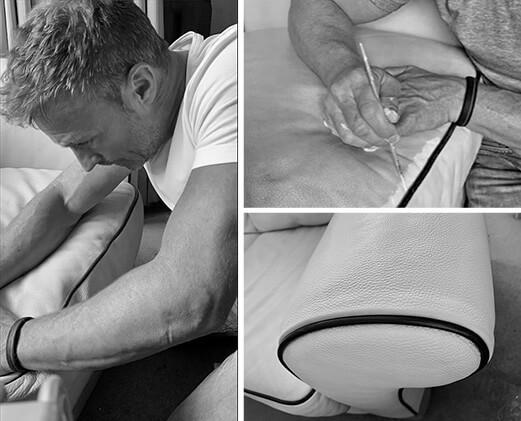
The best way to keep a leather sofa looking new is to change a few habits rather than buy a cupboard full of products. After 26 years of restoring sofas across Essex and London, we can tell you that the ones which still look fresh after a decade are rarely the ones that have been polished and conditioned every weekend. They are the ones that have been kept out of the sun, away from the radiator, cleaned gently and infrequently with the right thing, and looked at by a professional before small problems became big ones.
This post sets out what genuinely makes a difference, what quietly does harm, and where a periodic leather sofa cleaning from us fits into the picture. None of it is complicated, but a lot of it runs against the advice you will find on the back of a bottle.
What actually ages a leather sofa
Leather does not wear out evenly, and it does not wear out quickly on its own. Almost every sofa we are asked to restore has been aged by one or more of the same four things: light, heat, oil and abrasion.
Light fades the colour. A sofa in a south facing bay window in Leigh-on-Sea or under a conservatory roof in Billericay will have one side noticeably paler than the other within a few summers. Heat dries the hide. Radiators, log burners and underfloor heating pull the moisture out of leather and leave it stiff, which is when it starts to crack. Oil darkens it. Skin, hair and hand products build up on headrests and arms until the finish breaks down. And abrasion, from jeans rivets, dog claws, rough throws and hard scrubbing, wears the colour off the high spots.
The reason this matters is that almost everything on that list can be reduced without spending any money. The sofa position, the cushion rotation, the throw over the arm and a decision not to eat on it are worth more than any product.
Simple habits that keep a leather sofa looking new
Jon, our founder, gives the same advice to every customer after a restoration, and it comes down to a handful of habits.
Mind the position
Move the sofa out of direct sunlight if you possibly can, even by a metre. Keep it away from radiators and out of the direct blast of a wood burner. If the room only works with the sofa in the window, blinds during the brightest part of the day and a throw over the exposed arm in summer will do a great deal.
Rotate and plump
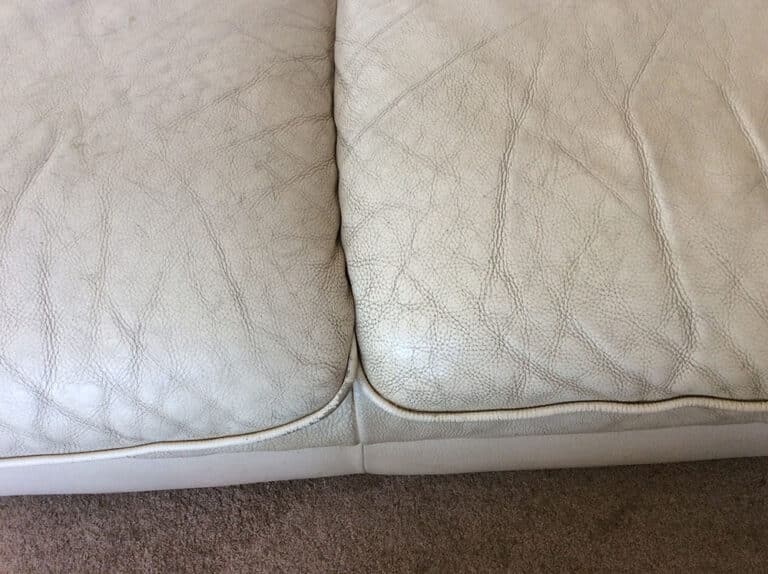
Where the cushions are loose and reversible, turn them regularly so that the same seat is not doing all the work. Plumping the cushions keeps the filling even, which stops the leather creasing in the same place every day. If the cushions have gone flat and the leather is sagging into deep folds, that is a sign the interiors need attention before the leather starts to crack along the creases.
Dust it, do not scrub it
A soft dry cloth or the upholstery brush on the vacuum once a week is enough for day to day dust. Dust is mildly abrasive, so leaving it to build up and then rubbing it about with a damp cloth is exactly how the colour wears off the front edges. Gentle and regular beats hard and occasional every time.
Deal with spills straight away
Blot, do not rub, and use nothing but a clean dry cloth. Most water based spills on a finished leather will lift straight off if you get to them quickly. Anything greasy, anything coloured (ink, red wine, curry, hair dye) and anything that has soaked in is a phone call, not a cleaning job, because the wrong product on those will set the mark rather than lift it.
Keep the sharp things off it
Belt buckles, jeans studs, dog claws, keys in back pockets and children’s toys with hard edges all leave marks that add up. A throw where the dog sits and a rule about feet on the sofa will save more colour than any amount of conditioning.
Products that do more harm than good
This is where most good intentions go wrong. We restore a lot of sofas that would have been fine if they had simply been left alone.
Baby wipes are top of the list. They are marketed as gentle, but the ingredients that make them work on skin strip the protective finish from leather with every wipe. A sofa wiped down with baby wipes for a couple of years ends up dull, porous and quick to stain. Household sprays, washing up liquid and multi surface cleaners do the same thing faster.
Then there are the conditioners, creams, balms and oils, including the supermarket leather care kits and the olive oil that people still swear by. Modern pigmented leather, which is what most sofas from the big retailers are made of, has a sealed surface that does not absorb these products in the way people imagine. What actually happens is the product sits in the grain, attracts dust, softens the finish and eventually goes sticky. Jon has stripped a good many sofas in Chelmsford and Romford whose only problem was years of built up conditioner.
Silicone based protectors and shine sprays are a particular nuisance because they make later repair work harder. Colour will not bond properly to a silicone contaminated surface, so a sofa that has been sprayed for years takes considerably more preparation if it ever needs recolouring.
If you want to understand what your sofa’s finish is actually made of, the trade association Leather UK is a useful place to start. Knowing whether you have a pigmented, semi aniline or aniline leather changes what is safe to do with it, and most retailers do not make that clear at the point of sale.
Why professional cleaning is part of keeping it new
A professional deep clean is not the same as what you can do with a cloth. When we clean a sofa we remove the grime that has bonded to the finish, the oils that have started to work their way into the headrests and arms, and any residue from previous products. We then reseal the surface with a protective coat so that the next few years of use land on a barrier rather than on the leather itself.
Done every couple of years, or sooner in a busy household with pets and children, that cycle is what will keep a leather sofa looking new rather than merely clean. Done never, the same sofa gradually darkens in the wrong places, dulls everywhere else, and eventually needs restoring rather than cleaning.

The other advantage of a professional visit is that Jon sees the early signs of trouble that most owners miss: a thread going on a seam, colour thinning on the front edge of a cushion, a small crack on the arm where the sun catches it. Each of those is a small job to sort while it is small.
When a sofa needs more than cleaning
Sometimes a customer calls us for a clean and what they actually need is restoration. The colour has worn through on the seats, the arms have gone dark and shiny, the cushions have lost their shape, or the sun has bleached one end. None of that is the end of the sofa. Our leather restoration work covers cleaning, colour repair, cracks, worn patches and new cushion interiors, and a full leather sofa recolouring can bring a tired ten year old sofa back to showroom condition for a fraction of the cost of replacing it.
The point is that a good quality leather sofa, a Natuzzi, a Duresta, a well made Chesterfield or a decent John Lewis or DFS model, is designed to be maintained for decades. Replacing it because it has gone grubby is throwing away a perfectly good frame and hide.
Book a clean and protect for your sofa
If you would like us to keep a leather sofa looking new for you rather than leave it to chance, send a couple of photos of the sofa as it is, in daylight, along with an idea of where you live. We cover Essex and London, from South Benfleet, Rayleigh and Southend to Basildon, Brentwood, Thurrock and the East End, and cleaning and protection is done in your home.
Call Jon on 07967 216250 or fill in the enquiry form below this post. There is more detail on what is involved on our leather sofa cleaning page. Every job is quoted individually, and quotes are free.