How often should a leather sofa be cleaned by a professional? For most family homes, once every twelve to eighteen months keeps the leather in good order, with a quick wipe over between visits. A sofa that has children, pets or a daily commuter’s suit trousers on it may need attention every year. A guest-room chair that is sat on at Christmas can go considerably longer. There is no single right answer, but there are a few clear signs that tell you when it is due, and we cover them below along with what a proper leather sofa cleaning visit involves.
Why Leather Needs Cleaning at All
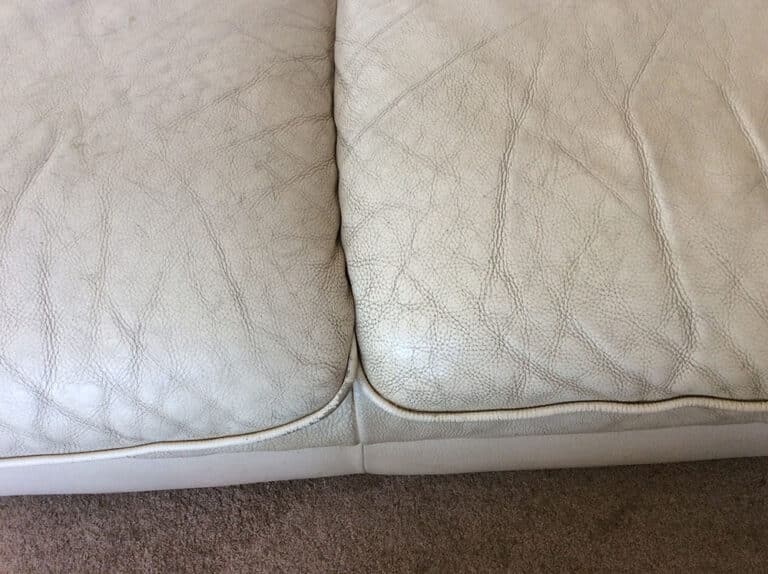
Leather looks tough, and compared with fabric it is. But the surface you sit on is a thin coloured finish over the hide, and everything that touches it leaves something behind. Skin oil from hands and forearms. Hair product on the headrests. Dye from new jeans. Crumbs, dust, dog hair and the grey film that settles from the air in any home near a main road.
Left alone, that layer of grime does two things. It dulls the sofa, so a tan looks muddy and a cream goes grey. And it slowly breaks the finish down, because oils soften topcoats and grit acts as a fine abrasive every time someone sits down. That is why an uncleaned sofa does not just look dirty. It wears out faster.
Regular professional cleaning removes that layer before it does lasting damage, and gives us the chance to spot early problems, such as a seam starting to open or a patch of colour beginning to wear, while they are still small.
How Often Should a Leather Sofa Be Cleaned? It Depends on the Household
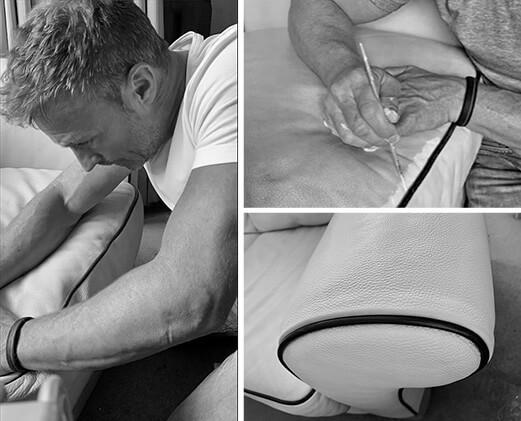
Jon, our founder, has cleaned sofas in every kind of home across Essex and London over 26 years, and when people ask him how often should a leather sofa be cleaned, his honest answer is that the calendar matters less than who lives there. Here is how we would think about it.
Every twelve months or sooner
Households with young children, a dog or cat that sits on the furniture, smokers, or someone who uses the sofa every evening in work clothes. Also anyone with a light-coloured sofa, because cream, ivory and pale grey leather show grime long before a dark brown does. In a busy family home in Basildon or Romford, a yearly clean is not indulgent. It is maintenance.
Every eighteen months
A typical couple or small family, sofa used daily, no pets on it, a mid-tone colour. This is where most of our customers sit, and many book us in at roughly the same time each year without waiting for the sofa to look bad.
Every two to three years
Lightly used rooms: a formal lounge, a home office chair, a second sofa in a conservatory that is only used in summer. These still need cleaning, partly because dust and sunlight do their work regardless of use, but the interval can stretch.
Signs it is due now
Whatever the schedule, how often should a leather sofa be cleaned comes down to what you can see. Get in touch if you notice any of these: the headrests or arm fronts have gone darker or slightly shiny; the seats look dull or greyish compared with the back; there is a faint sticky feel on the arms; a wipe with a barely damp white cloth comes away grey; or the sofa has a smell that opening the windows does not shift.
What About Cleaning It Yourself in Between?
Between professional visits, a light wipe with a soft, dry or barely damp cloth to take off dust and crumbs is all a leather sofa needs. That is not a cleaning method, it is housekeeping, and it is fine.
The trouble starts when people go further. Baby wipes are the most common culprit we see: they contain surfactants and preservatives that soften the finish, and after a year of weekly wiping the arms of a sofa can start to feel tacky and then peel. Washing-up liquid, multi-surface sprays, vinegar solutions and furniture polish all do similar damage, and silicone-based polishes leave a film that later stops repairs and recolouring from bonding. Supermarket “leather conditioner” and saddle soap are designed for boots and tack, not for pigmented upholstery, and they often darken the leather permanently.
The “hidden spot test” people recommend online does not really protect you, because the damage from these products builds up gradually rather than showing instantly. If a product was not made for finished upholstery leather and applied by someone who knows what type of leather they are dealing with, it is safer left in the cupboard.
What a Professional Leather Sofa Cleaning Visit Involves
A professional clean is a different thing from a wipe-down, and the difference is mostly in what is removed and what is put back. Jon starts by identifying the leather type, because pigmented, semi-aniline and aniline leathers all need a different approach and the wrong one can strip colour. He then uses cleaners formulated for that leather to lift the built-up oils and dirt out of the grain, working panel by panel, with particular attention to the headrests and arms.
Where grease has gone right through the finish on the head and arm areas, plain cleaning will not shift it, and that is where a deeper treatment comes in. Our leather head area restoration degreases those panels and rebuilds the colour and topcoat so they match the rest of the sofa again.
After cleaning, a protective finish is applied. This is the part most people miss. Cleaning takes the old protection off along with the dirt, and a sofa left unprotected will pick up grime faster than before. The protection we apply restores the barrier against oils, spills and dye transfer, so the sofa stays cleaner for longer and the next clean is easier.

The Environment Matters as Much as the Schedule
Two identical sofas bought on the same day can age very differently depending on the room, and that changes how often should a leather sofa be cleaned as well. A sofa hard against a radiator dries out and its finish cracks sooner. One beside south-facing patio doors in Leigh-on-Sea fades on the window side. A conservatory sofa lives with big swings in temperature and humidity that leather does not enjoy. The Energy Saving Trust has sensible guidance on home heating and humidity, and the same conditions that are comfortable for people tend to be kind to leather too.
If your sofa is in one of these spots, it is worth mentioning when you book, because we can adjust the protection we use and tell you what to watch for. Sun-faded panels, in particular, are better dealt with early, before the colour loss becomes a restoration job rather than a clean.
When Cleaning Is Not Enough
Sometimes a customer in Chelmsford or Colchester books a clean expecting the sofa to come up like new, and we have to explain that what looks like dirt is actually worn colour. Cleaning removes grime. It does not put back pigment that has rubbed away, close cracks, or lift stains that have been sitting in the grain for years. In those cases the sofa needs a leather restoration, which includes a deep clean as its first stage and then goes on to repair and recolour.
The good news is that a sofa which has been cleaned regularly rarely reaches that point in the first place. The customers who book us every year or so tend to have sofas that look good at fifteen years old, and the ones who call after a decade of baby wipes tend to need considerably more.
Book a Professional Leather Sofa Clean in Essex or London
If you are still asking how often should a leather sofa be cleaned in your particular home, or whether yours needs a clean or something more, send us a couple of photos taken in daylight, including a close-up of the headrests and arms, and tell us roughly where you are. Jon will tell you honestly what he sees and give you a free quote for a professional leather sofa cleaning visit or whatever the sofa actually needs.
Call Jon on 07967 216250 or fill in the enquiry form below this post. We cover South Benfleet, Southend-on-Sea, Rayleigh, Billericay, Brentwood, Thurrock and across east and central London.