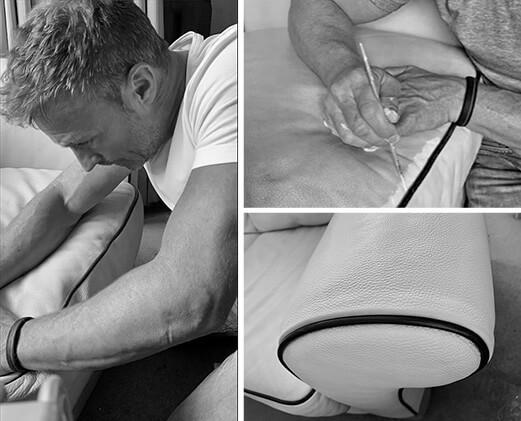
Hotel leather furniture restoration is about getting seating back to the standard your guests expect without the cost, lead time and disruption of buying new. Most of the tired leather we see in hotels (scuffed lobby armchairs, cracked bar stools, greasy headboards, faded conservatory seating) can be restored on site, in the quiet hours, so that the room is back in use the same day. This post explains what can be saved, what cannot, and how the work fits around a hotel that never really closes.
We are The Leather Expert, based in South Benfleet in Essex and working across Essex and London. Jon, our founder, has 26 years in the trade and has carried out corporate leather restoration for hotels, restaurants, offices and retailers including John Lewis, Harrods and Peter Jones. The approach is the same whether it is a boutique hotel in Shoreditch or a wedding venue outside Chelmsford.
Why Hotel Leather Wears Out So Quickly
A domestic sofa might be sat on by four people a day. A lobby armchair near reception can be sat on by a hundred, many of them with wet coats, luggage, laptop bags and a phone charger dragging across the arm. Leather in a hotel simply gets more use in a year than most furniture gets in a decade.
Then there is the cleaning. Housekeeping teams are under pressure and usually reach for whatever is on the trolley, which tends to be a multi-surface spray, a disinfectant wipe or a glass cleaner. None of those are designed for leather. They strip the protective top coat, dry the hide out, and leave it dull and prone to cracking. Over months of daily wiping, a well-made chair can end up looking twenty years older than it is.
Add hair products and skin oils on headboards and chair backs, sunlight through big lobby windows, spilled drinks at the bar, heat from under-window radiators in bedrooms, and the occasional dog in a pet-friendly room, and you have a very specific pattern of damage that we recognise the moment we walk in.

What Hotel Leather Furniture Restoration Can Fix
Almost anything that has happened to the surface of the leather can be put right. The list below is the sort of thing we handle most weeks.
Colour loss and general tiredness
Arms, seat fronts and head areas go pale and patchy where the pigment has worn away. We clean the leather back to a sound surface, repair any small cracks, and then recolour the whole piece so that it is uniform again. This is by far the most common job in a hotel and the one that gives the biggest lift for the money. It is the same process as our leather sofa recolouring service, applied to a whole set of chairs rather than one sofa.
Head and hair-oil darkening
Headboards and the top of chair backs pick up a dark, sticky patch where hair products and skin oil have soaked in. A wipe over will not shift it because the oil is inside the leather. We use a proper degreasing process to draw it out before restoring the colour, and the result is a headboard that looks fresh rather than one that looks wiped.
Scuffs, cracks, cuts and cigarette burns
Luggage scuffs on lobby chairs, cracked seat cushions on bar stools, cuts from keys and bag zips, and burns from the smoking terrace all respond to proper repair. Cuts and tears are backed from behind, filled, and blended into the surrounding colour. Burns are cut back and rebuilt. Done well, these repairs are very hard to spot afterwards.
Stains from food and drink
Red wine on a cream chair in the bar, coffee on a bedroom armchair, and the mystery marks that appear after a conference dinner. Some come out with specialist cleaning; some have dyed the leather and need recolouring over the top. Either way, it is fixable.
Colour changes to suit a refurbishment
If a refit changes the scheme and the existing leather furniture is structurally excellent but the wrong shade, it can be recoloured rather than replaced. Going darker is straightforward. Going lighter is possible on the right leather but takes more work, and we will always be honest about which pieces suit it.
What Cannot Be Restored
Some things are beyond restoration, and it is better to know before you plan a budget. Bonded leather, which is a coated product made from leather fibres rather than a whole hide, peels rather than wears. Once it starts, there is no repair that lasts, and the honest advice is to replace it or have the piece reupholstered in real leather. Frames that are broken, springs that have gone and seat foam that has collapsed are structural problems; we can sort the cushions with new foam cushions, but a wobbly frame needs a joiner. Leather that has dried out to the point of crumbling when flexed is also past saving.
If a chair sits in the “not worth it” category, we will say so. Our reputation depends on hotels calling us back, not on selling work that will not last.
Working Around Guests and Operations
This is where hotel work differs from a domestic job. Nobody wants a lobby taped off during check-in or a bar out of action on a Friday night. We plan the work with your general manager or housekeeping lead so it fits the pattern of the building.
Lobby and bar furniture is usually restored in phases, taking a few pieces at a time so the space stays usable, often starting early in the morning before the breakfast rush. Bedroom furniture is done room by room on the days those rooms are off sale, and we can fit in with a rolling deep-clean schedule. The products we use are low odour and cure quickly, so a chair can typically be back in service later the same day. For larger sets, or pieces that need a lot of structural work, taking them to our workshop and returning them in batches sometimes makes more sense, and we will discuss which suits you.
We are also careful about the surroundings. Carpets, walls and neighbouring furniture are protected, and we clear up as we go, so there is nothing for housekeeping to deal with afterwards.
Why In-House Fixes Tend to Backfire
Facilities teams often try to keep on top of leather themselves, and we understand why. The trouble is that the products sold for the job rarely help. Spray-on leather paints from the internet sit on top of the old finish, do not flex, and start to peel or crack within months, at which point the whole chair has to be stripped before it can be restored properly. Furniture polish and silicone sprays give a quick shine and then attract dust and make the surface slippery. Colour balms and creams in a generic “brown” or “black” never match the original, and they transfer onto guests’ clothing. Superglue on a split turns a small repair into a rebuilt panel.
The cost of stripping a failed in-house repair is usually more than the cost of doing it right the first time. If the leather in your hotel is starting to show its age, the best thing your team can do is stop cleaning it with general-purpose products and give us a call.
Restoration Versus Replacement: the Numbers
Good hotel furniture is expensive, particularly the bespoke pieces that came in with the last refit. Replacing a set of lobby armchairs means design time, lead times measured in months, delivery, disposal of the old chairs, and the risk that the new ones do not quite match the rest of the room. Hotel leather furniture restoration means a few days of work, no lead time, and the same chairs your designer chose, looking as they did when they arrived.
There is also a sustainability angle. Leather is a durable material that is meant to last decades, and keeping good pieces in use is far better than sending them to landfill. The industry body Leather UK has plenty to say about the longevity of properly made leather, and restoration is how that longevity is realised in a hard-working building.
We do not quote fixed rates for hotel work because every set is different. What we can say is that restoring a set of chairs is normally a fraction of the price of replacing them with pieces of the same quality, and that every job is quoted individually, and quotes are free.
Get a Quote for Hotel Leather Furniture Restoration
The easiest starting point is a few photos. Send us a couple of the worst pieces, one of a typical example, and a rough count of how many items are involved. Tell us where the hotel is, whether that is central London, Southend-on-Sea, Colchester or anywhere between, and when the space is quietest. Jon will come back with an honest view of what can be done and what it will cost, and for larger sites he can visit to survey the furniture in person.
Call Jon on 07967 216250 or fill in the enquiry form below this post. You can read more about how we work with hotels, restaurants and offices on our corporate leather restoration page, and see the range of work we take on under leather restoration.