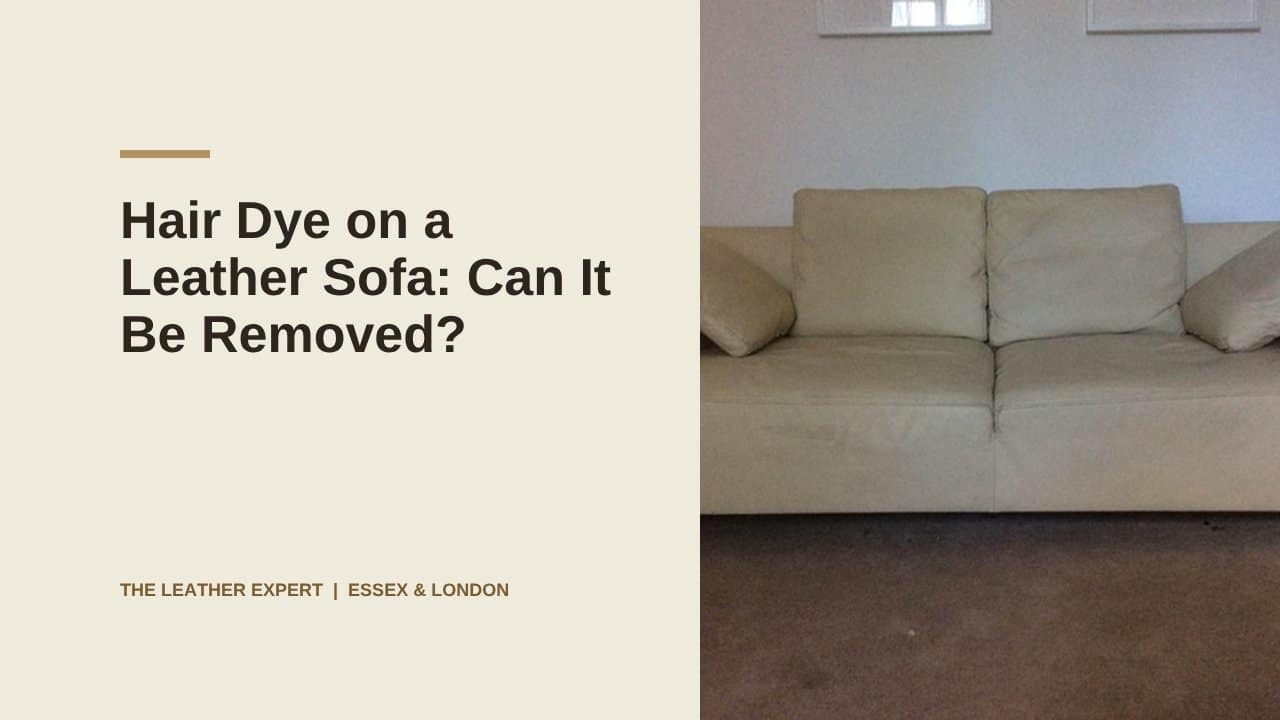
Hair dye on a leather sofa is one of the more stubborn stains we deal with, but it is rarely the end of the sofa. Whether it is a purple smudge on a cream armrest from a box dye that had not quite finished developing, or a dark halo on a headrest from freshly coloured hair over several weeks, the mark can usually be removed or, where the dye has gone into the finish, the area can be recoloured so it disappears. What matters is what you do in the first hour, and what you do not do.
Why hair dye stains leather so badly
Permanent hair dye is designed to do one thing very well: bond colour to a protein surface and stay there through dozens of washes. Leather is a protein surface. So when a dye gets onto a sofa, it does not simply sit on top like a coffee spill. Given a little time and warmth, the dye develops on the leather in the same way it develops on hair.
Most leather sofas have a pigmented finish with a clear seal over the top, which gives some protection. On a well-finished sofa a fresh drip can often be lifted if it is caught quickly. On aniline or semi-aniline leather, which has little or no protective coating, the dye soaks straight in and the stain becomes part of the hide within minutes.
Semi-permanent and wash-in colours are a little kinder because they are not designed to bond as aggressively, but they are often brighter (the pinks, blues and purples popular with teenagers) and they still stain pale leather readily. Henna is a special case: it is a natural dye that bonds very firmly to protein, and it is one of the hardest to lift by cleaning alone.
The colour of the sofa matters too. Dark brown or black leather can hide a lot. Cream, ivory, white and pale grey leather, which are popular in modern living rooms from Brentwood to Canary Wharf, show every trace, and even a faint residual tint stands out against them.
How hair dye on a leather sofa usually happens

We see three main patterns. The first is the direct spill: a bottle knocked over, a gloved hand on the arm, a towel dropped onto a cushion. These are the most dramatic looking but often the most treatable because the dye has not had time to develop.
The second is transfer from damp, freshly dyed hair. Someone colours their hair, sits down on the sofa to watch television while it dries, and leaves a pale pink or purple shadow on the headrest. This one often goes unnoticed for a day or two, by which point the dye has set.
The third is the slow build. Freshly dyed hair keeps releasing a small amount of colour for a week or more, and each evening on the same spot adds a little more. Combined with the natural oils and hair products that darken headrests anyway, the result is a greasy, tinted patch on the back cushion. This is closely related to the head-area darkening we treat as part of our leather head area restoration service.
What not to do
The internet is full of suggestions for dealing with hair dye on a leather sofa, and Jon has seen the results of most of them. Nail varnish remover and other solvents are the worst offenders. They will shift the dye, but they also strip the finish from the leather, leaving a pale, rough patch that is bigger and more obvious than the original stain. Hairspray, which is often recommended, does much the same thing more slowly.
Bleach-based cleaners, whitening toothpaste, bicarbonate of soda pastes and magic erasers all rely on abrasion or bleaching. On leather they scour the surface, remove colour unevenly and leave a matt scuff that catches the light. Baby wipes and washing-up liquid are gentler but rarely touch a set dye, and repeated scrubbing wears the finish just the same.
The other common mistake is heat. Using a hairdryer to dry a wet area, or leaving a cleaned patch next to a radiator, will actually help the dye develop and can fix it permanently. If in doubt, blot with a clean dry cloth, leave it alone and send us a photo.
How we remove hair dye from leather professionally
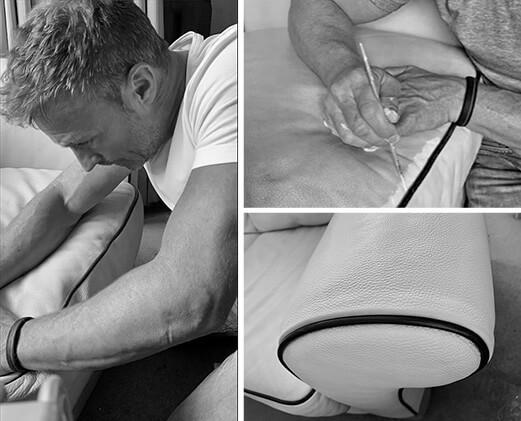
Every job involving hair dye on a leather sofa starts with a proper look at the leather. Jon identifies the leather type and finish, checks how deep the dye has gone, and looks at whether anything has already been tried on the area. Then the approach is decided.
Cleaning where the dye is on the surface
If the sofa has a good protective finish and the dye has not fully developed, professional leather cleaning products can lift most or all of it without damaging the surface. This is the best outcome and it happens more often than people expect, particularly on darker sofas. Our leather stain removal service uses cleaners that are designed for leather finishes rather than general household products, and the difference is considerable.
Recolouring where the dye has gone in
Where the dye has bonded with the finish or soaked into the hide, cleaning alone will not resolve it. Instead, the area is cleaned, prepared and then recoloured with a pigment mixed to match the surrounding leather. On a cream sofa this means building up enough coverage to hide the tint completely without leaving a thick, painted look, and then blending the edges so there is no visible boundary. A protective top coat is applied to seal the repair and match the sheen of the rest of the sofa.
On a headrest where the stain sits within a larger greasy, darkened area, it is often better to treat the whole cushion or panel. That gives a more even result and deals with the oil build-up at the same time.
Full panel recolouring
Occasionally a dye spill is so extensive, or has been attacked with so many cleaning products, that a localised repair would look patchy. In those cases we recolour the whole seat, arm or cushion, which is part of our leather sofa recolouring service. Pale sofas in particular benefit from this approach because any slight difference in tone is so visible.

Can it always be fixed?
Nearly always. Because the finish on most leather furniture can be rebuilt, even hair dye on a leather sofa that will not come out can be covered and sealed so that it is invisible. The exceptions are unprotected aniline leathers where the customer wants the natural, uncoated look preserved; on those, a deep dye stain can be reduced but not always removed without changing the character of the leather. Jon will always explain the options before starting rather than promising something the leather cannot deliver.
If the sofa is a rental property piece or the damage happened in a salon waiting area, it may also be worth checking your position with your insurer before deciding how to proceed. The Association of British Insurers has general guidance on what home contents policies typically cover for accidental damage.
Preventing the next stain
Once the sofa is back to normal, a leather protection treatment across the whole piece makes the surface less absorbent and gives you a better chance of wiping off the next accident before it takes hold. We can apply this at the end of the repair. A towel over the headrest for a few days after a hair colour appointment is the simplest precaution of all, and it is what most of our hairdresser customers in Southend-on-Sea and Basildon do at home.
Regular professional leather sofa cleaning also helps, because a clean, well-sealed finish resists staining far better than one clogged with oils and product residue.
Get a quote to remove hair dye from your leather sofa
If you have found hair dye on a leather sofa, send us two or three photos of the stain in daylight, one close up and one showing the whole piece, and tell us roughly when it happened and whether anything has been used on it. Let us know where you are; we cover Essex, London and the surrounding area from South Benfleet and most stain work is carried out in your home.
Call Jon on 07967 216250 or fill in the enquiry form below this post. You can read more about our leather stain removal service, and every quote is free and without obligation.