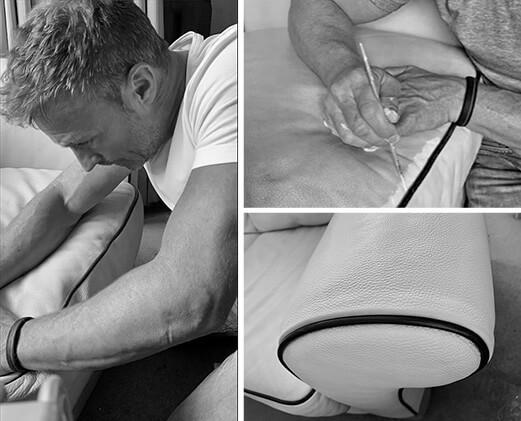
Does leather furniture need conditioning? Yes, but far less often than the tubs in the supermarket would have you believe, and with a great deal more care over what goes on it. Most of the leather sofas and armchairs we look after across Essex and London are not suffering from a lack of conditioner. They are suffering from the wrong products, applied too often, on top of dirt that was never removed. A professional leather sofa cleaning and protection once in a while does far more good than a monthly rub with whatever was on offer.
What conditioning is actually for
Leather starts life as a hide full of natural fats and oils. The tanning process fixes those in place, and the finishing process adds pigment and a lacquer top coat to most upholstery leather. Over the years, warmth, sunlight, central heating and simple use gradually draw those oils out. The fibres stiffen, the surface loses its slight sheen, and eventually the finish starts to crack because the hide beneath it can no longer flex.
A good conditioner is designed to slow that process down. It puts a small amount of the right kind of moisture and fat back into the leather and leaves a protective layer on top that resists spills and body oils. That is the whole job. It is not a cleaner, it does not repair damage, and it will not bring colour back to a faded seat.
Does leather furniture need conditioning as often as the adverts say?
No. On a pigmented sofa (which covers the vast majority of leather furniture sold by the big retailers) the lacquer top coat does most of the protective work. The conditioner sits on that coat rather than soaking deep into the hide, so applying it every few weeks achieves very little beyond building up a film that attracts dust.
Jon, our founder, generally tells customers that a good clean and protect once or twice a year is plenty for a family sofa in normal use. A sofa in a south-facing conservatory in Leigh-on-Sea, or one parked next to a radiator in a Victorian terrace in east London, might want attention a little more often because the heat is drying it faster. A rarely used chair in a spare bedroom might go years without needing anything.
Aniline and semi-aniline leather is different
Some higher-end furniture uses aniline or semi-aniline leather, which has little or no pigment coating. It feels wonderfully soft and shows the natural grain, but it is also far more absorbent. This type of leather does benefit from regular feeding, and it is also the type most easily ruined by the wrong product. If you are not sure which kind you have, that alone is a good reason to ask before you put anything on it.
Why the wrong conditioner makes things worse
The damage we see from conditioning is almost never caused by people neglecting their furniture. It is caused by people trying hard with the wrong things. A few examples from the last year or so:
- A cream sofa in Brentwood treated with olive oil “because it is natural”. The oil went rancid inside the hide, the seats turned a dull orange and started to smell in warm weather.
- A dark brown armchair in Romford that had been wiped with baby oil weekly for years. The surface became so greasy that the finish would not hold and started to peel in sheets.
- A tan corner sofa in Billericay dosed with a silicone spray meant for car dashboards. It looked glossy for a fortnight, then went sticky and picked up every fibre from the family’s jumpers.
- A pair of chesterfield chairs in Rayleigh treated with saddle soap, which is made for thick tack leather and left thin upholstery hide dry and streaked.
Every one of these owners was trying to look after their furniture. Every one of them ended up needing a leather restoration that cost many times what a professional clean and protect would have done. We do not say that to be unkind. We say it because it is the single most common way that good leather furniture gets damaged in ordinary homes.
Conditioning over dirt
There is a second, quieter problem. Conditioner applied to a sofa that has not been properly cleaned seals the dirt in. Body oils on the headrest, grease on the arms, the fine grey grime that builds up on seat fronts, all of it gets locked under a layer of product. The sofa looks slightly shinier and slightly darker each time, and the owner assumes it is ageing gracefully. When we finally clean it, the difference between the treated area and the original colour can be startling.
Signs your leather is genuinely dry
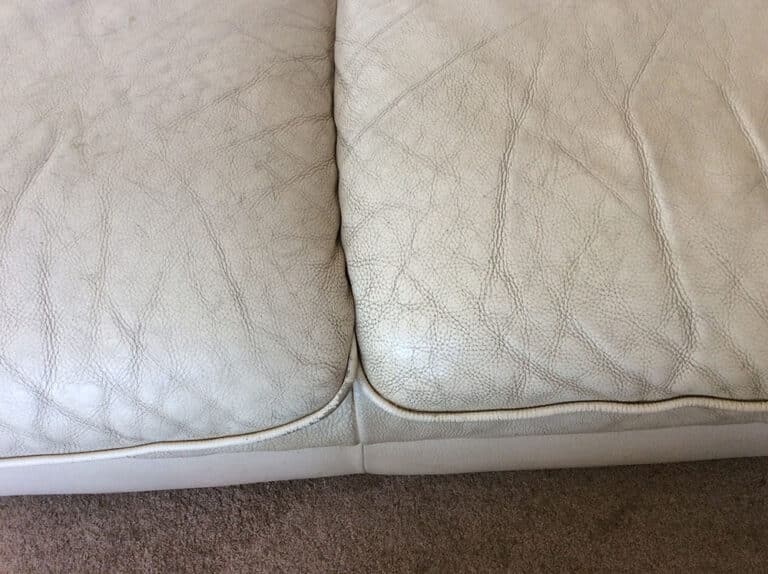
It is worth knowing what real dryness looks like, because it is easy to mistake dirt or wear for a leather that needs feeding. Dry leather feels stiff rather than supple when you press it. Fine lines appear across the seat and along the front edge of the cushions, particularly where the leather bends. The surface looks flat and chalky rather than having its original soft lustre. In more advanced cases the finish begins to crack and small flakes lift at the edges of the cracks.
Central heating is the usual culprit in Essex homes. The air in a well-heated living room in January can be remarkably dry, and leather furniture pushed close to a radiator suffers first. The Energy Saving Trust has plenty of sensible guidance on heating homes efficiently, and one side effect of moving furniture away from radiators is that the leather lasts longer as well.
Wear is not the same as dryness
A worn seat that has lost its colour on the front edge is not dry. It has lost pigment through friction, and no amount of conditioner will replace it. That is a recolouring job, not a conditioning job. We deal with this constantly on sofas from the likes of DFS, Natuzzi and John Lewis, and the fix is to clean, seal and recolour the worn areas so they match the rest of the piece.
What a professional clean and protect involves
When we look after a sofa, the first step is always to identify the leather type and check the condition of the finish. Only then do we choose the products. We clean the surface with something formulated for that kind of leather, working carefully so the top coat is not abraded, and paying particular attention to the headrests and arms where body oils build up.
Once the leather is clean and dry, we apply a protection cream that suits the finish. On pigmented leather that means a light, breathable layer that guards against spills and grime. On aniline leather it means something that feeds the hide without darkening it or leaving it tacky. The whole process leaves the sofa clean, softer to the touch and far better able to shrug off the next year of family life.
Where the leather has already gone past the point where feeding helps, we can go further. Cracked and stiff areas can be softened and rebuilt, the finish repaired and the colour restored. Jon has brought back sofas that owners in Southend-on-Sea and Basildon had already priced up for replacement.

Everyday habits that matter more than conditioner
The honest answer to “does leather furniture need conditioning” is that it needs sensible treatment more than it needs product. Keep it out of direct sunlight where you can, or at least close the blinds on the brightest afternoons. Leave a gap between the sofa and any radiator. Wipe up spills promptly with a clean, dry cloth rather than reaching for a spray. Keep the dog off the arms if you can manage it, and ask teenagers not to sit on the front edge of the cushions with their feet on the floor, which is how most seat fronts wear through.
Beyond that, a professional clean and protect every year or so is all most sofas need. It costs a fraction of what people spend on tubs of conditioner over the same period, and it comes with a pair of experienced eyes checking the leather for problems while they are still small.
When conditioning is no longer enough
Sometimes a customer calls us hoping a good clean will sort out a sofa that is cracked across every seat, with colour worn through to the hide and stitching starting to fail. Cleaning will help, but it will not fix that. At that stage we talk honestly about restoration, and occasionally about whether the sofa is worth restoring at all. A cheap bonded leather sofa that is peeling usually is not. A solid, well-made hide sofa almost always is, because the frame and the leather have decades of life left in them once the surface has been rebuilt.
Ask us before you put anything on your leather
If you are in Essex, London or nearby and you are not sure whether your leather furniture needs conditioning, cleaning or something more, we are happy to advise. Send us a couple of photos in daylight, including any areas that worry you, and a rough idea of where you are. We will tell you plainly what we think it needs.
Call Jon on 07967 216250 or fill in the enquiry form below this post. You can read more about our leather sofa cleaning and protection service first if you like. Every quote is free and there is no pressure to go ahead.