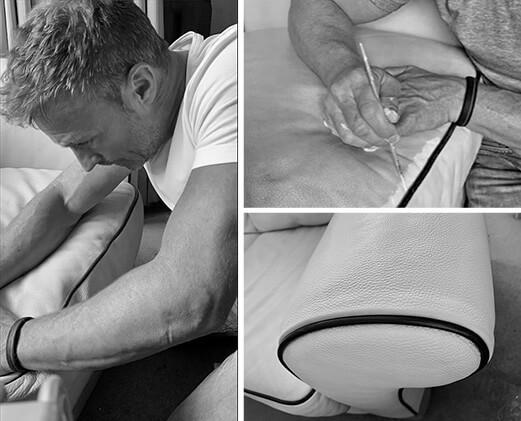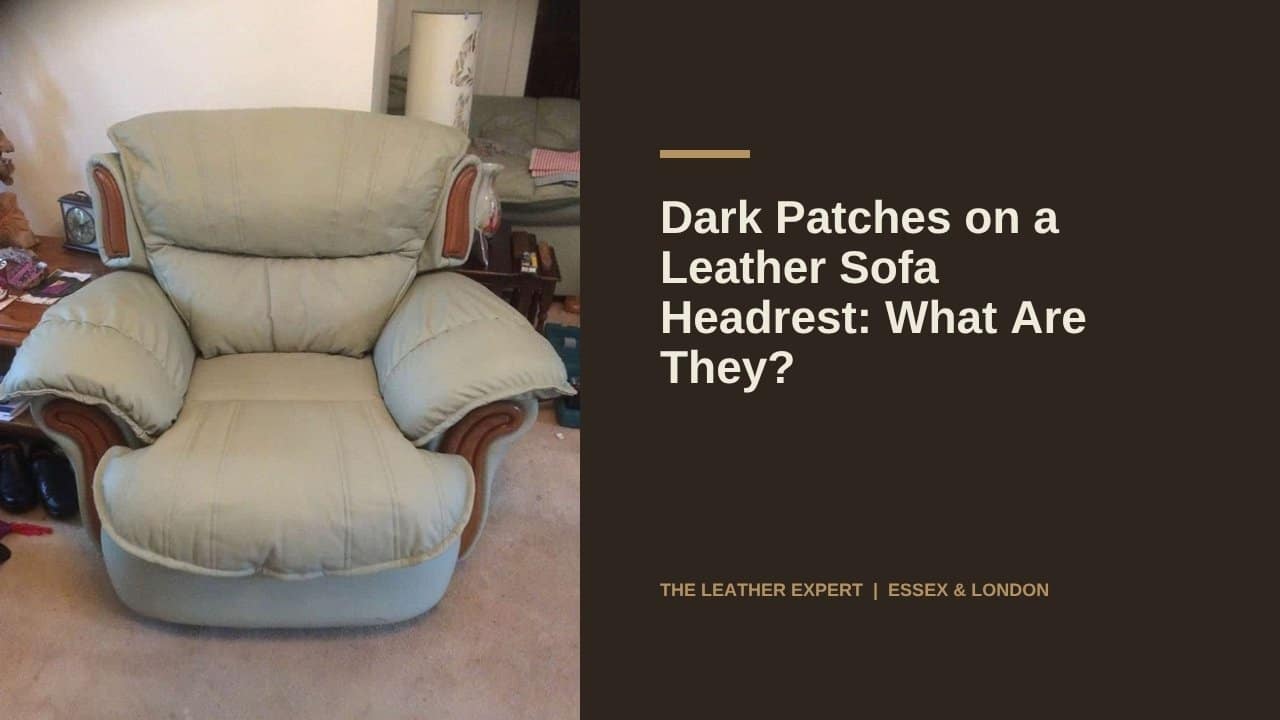
Dark patches on a leather sofa, especially on the headrest, the tops of the arms and the front edge of the seat, are almost always caused by natural oils from skin and hair soaking into the leather. They are not dirt in the usual sense and they will not wipe off, which is why so many people end up frustrated after an evening with a cleaning spray. The good news is that this is a well understood problem with a proper fix. Our leather head area restoration service exists for exactly this, and this post explains what is going on under the surface, why the usual home remedies backfire, and what we do about it for customers across Essex and London.
Why the headrest and arms go dark before anything else
Think about where your body touches the sofa. The back of your head rests on the top of the back cushion. Your hands and forearms sit on the arms. The backs of your knees and calves rub the front edge of the seat. Those are the exact spots that darken, and they darken because skin and hair produce oil constantly. Hair products, moisturiser, hand cream and sun cream add to it.
A pigmented leather sofa has a lacquer top coat that is designed to resist water-based spills. It is much less good at resisting oil. Over months and years the oil works its way through the lacquer and into the pigment and the hide underneath. Once it is in there, the leather in that spot is a slightly different material from the leather next to it: darker, often a little shiny, sometimes tacky to the touch, and in bad cases the finish starts to lift because the oil has broken the bond between the colour and the hide.
It is worse on certain sofas and in certain homes. Pale leathers show it sooner. Recliners, where the headrest is exactly at head height, get it faster than a low-backed design. Households where someone uses hair oil, wax or a lot of styling product see it within a year or two. Jon, our founder, has seen brand new sofas from Southend-on-Sea to Romford with a dark band on the headrest inside eighteen months.
Other things that cause dark patches on a leather sofa
Body oil is the main one, but it is worth ruling out a few others because the fix is different.
Ingrained dirt
General grime builds up in the grain and in the creases, and it darkens the seat and arm fronts over time. This is closer to true dirt and it responds to a proper deep clean without the oil-drawing stage. It usually looks greyer and duller than an oil mark, which tends to be darker and glossier.
Dye transfer
Dark denim and new black clothing can leave a bluish or grey shadow on a pale seat. Newspaper ink and some printed fabrics do the same. It sits on the surface rather than in it, and it has a different feel from an oil patch. This is a stain removal job and it often comes out well if it is caught before it is sealed in by a home conditioner.
Wear in the finish
On older sofas the lacquer itself wears thin in the most used spots. The pigment underneath is exposed, picks up dirt more readily and looks darker and matte. This is not a cleaning problem. It is a recolouring one, and it usually goes hand in hand with oil damage because the same areas are affected.
Damp and mould
A sofa against an outside wall or in a conservatory that is not heated in winter can develop dark speckled patches that are actually mould. These smell musty and appear in a pattern that has nothing to do with where people sit. They need a different approach again, and the underlying damp problem needs sorting or it comes back.
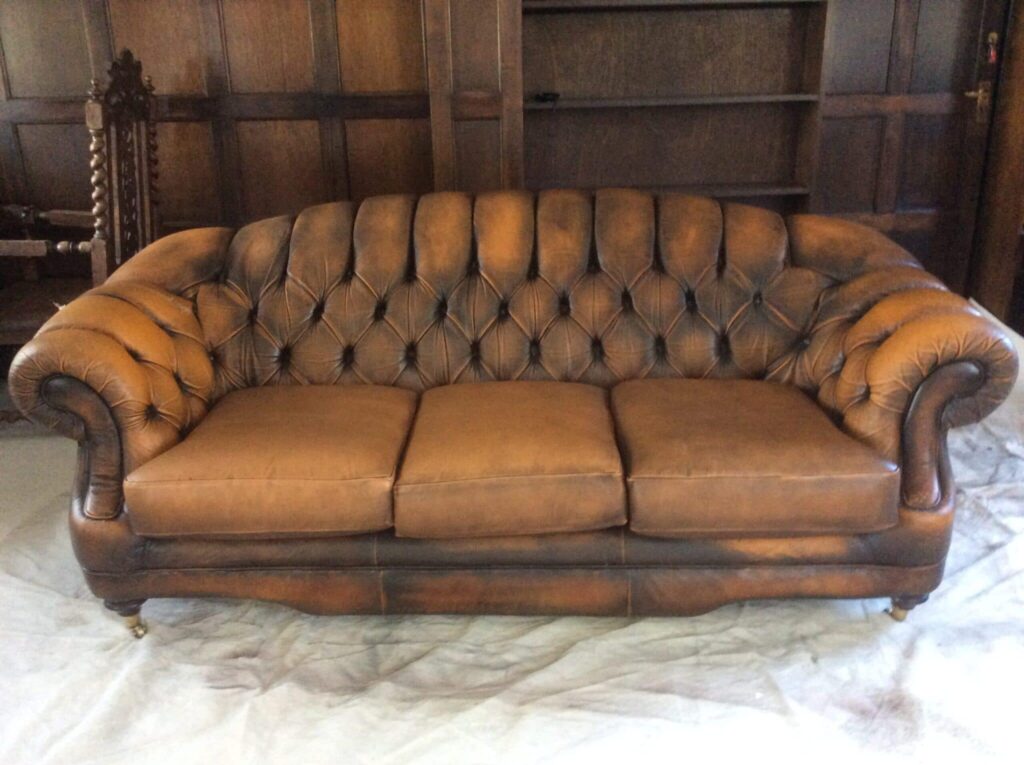
Why wipes, sprays and conditioners make it worse
We understand the instinct. Dark patches on a leather sofa look dirty, so you clean them. The trouble is that oil that has soaked into leather is not sitting on the surface waiting to be wiped, and most of what people use either does nothing or pushes the problem deeper.
Baby wipes and household surface wipes are the most common thing we hear about. They contain mild detergents and moisturising agents, and they leave a residue that softens the lacquer. Repeated wiping of the same spot slowly strips the finish, so the area gets duller and more absorbent, and the next few months of head oil go in even faster. Leather conditioners and “feeds” add more oil to a patch that is already saturated, which makes it darker. Some of the popular supermarket leather sprays contain silicone, which seals the oil in and makes it very hard for us to get out later.
Washing-up liquid, vinegar, bicarbonate of soda pastes and rubbing alcohol all appear in online tips. Each of them either does nothing to the oil, lightens the surrounding leather so the dark patch is even more obvious, or attacks the lacquer and leaves a pale, rough scar. Once a home remedy has damaged the finish, the job stops being cleaning and becomes recolouring, which costs more.
The one that really upsets people is the scrubbing. A headrest that has been rubbed hard with a cloth and a spray often has a clean-looking centre surrounded by a ring of lifted finish, and the dark colour comes back within a fortnight because the oil underneath was never touched.
What professional head area restoration involves
The key difference in our approach to dark patches on a leather sofa is that we treat the oil as something that has to be drawn out of the leather, not wiped off it. That takes the right products and, more importantly, time.
The first step is an assessment of how deep the oil has gone and whether the finish is still intact. We then carry out a proper deep clean of the whole sofa so that the affected area is not being treated in isolation. The oil-affected areas are then treated with a specialist degreasing process that lifts the oil up out of the fibres. On heavily saturated headrests this may need more than one application, with drying time in between, and we will tell you in advance if the piece needs to come into the workshop in South Benfleet for that.
Once the oil is out, we look at the finish. If the lacquer and colour are still sound, the sofa is sealed with a fresh protective top coat that is more resistant to oil than what was there before. If the finish has been damaged, either by the oil or by previous cleaning attempts, the affected panels are recoloured so the headrest matches the rest of the back, and then sealed. That crosses over into our leather sofa recolouring work and is done on the same visit where possible.
The end result is a headrest and arms that match the rest of the sofa in colour and sheen, with a surface that will resist the next few years of head and hand contact far better than the original.
Keeping it from coming back
We would be doing you a disservice if we said dark patches on a leather sofa never return. Skin and hair keep producing oil. What changes is the speed. A properly sealed finish holds it off for far longer, and a sensible cleaning routine with the right product (not wipes) keeps the surface from building up. Consumer organisations such as Which? have looked at leather care products and the claims made for them, and it is worth reading independent advice before buying anything off the shelf. Better still, ask us when we are there. We are happy to tell you what to use and what to avoid on your particular leather.
Cost and timing
A headrest and arms on a two or three-seater in an average state is usually a single visit at your home, including the deep clean and re-seal. Heavier saturation, or a set of recliners where every headrest has gone, takes longer and may involve a return visit. Where recolouring is needed the time and cost go up, but it is still a fraction of replacing a good sofa. The main factors are the size of the affected area, how long the oil has been in there, whether the finish has been damaged, and how many pieces are involved. Every job is quoted individually and quotes are free.
Get a Quote to Remove Dark Patches from Your Leather Sofa
If you have dark patches on a leather sofa that will not shift, send us a photo of the whole sofa and a close up of the darkest area in natural light, ideally with the flash off. Tell us roughly how old the sofa is, whether anything has already been used on the patches, and where you are, whether that is Basildon, Chelmsford, Leigh-on-Sea, Thurrock or east London.
Call Jon on 07967 216250 or fill in the enquiry form below this post. You can read more about the process on our leather head area restoration page, and Jon will come back to you with an honest view of what your sofa needs.