Can you dye a leather sofa a different colour? Yes. On most real leather sofas, a professional can change the colour completely, from tan to dark brown, from red to black, from a dated green to a soft grey, and the result looks like the sofa was made that way. It is not a job for a tin of dye from the internet, and some leathers and some colour changes suit it far better than others. Here is what is possible, how it is done, and how to know whether your sofa is a good candidate.
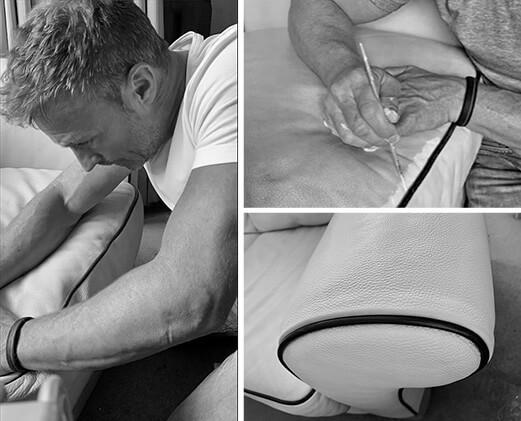
We are The Leather Expert, based in South Benfleet in Essex, and colour changes are one of the jobs Jon, our founder, enjoys most. Over 26 years he has recoloured sofas for homes across Essex and London and for retailers such as John Lewis and Harrods. Our leather sofa dyeing service covers full colour changes as well as bringing faded leather back to its original shade.
Why People Want a Different Colour
The sofa is usually fine. It is the room that has changed. A couple in Billericay redecorate the lounge and the burgundy Chesterfield that suited the old wallpaper now fights with everything. A family in Chelmsford inherits a good quality cream sofa and would rather have something that hides the marks from two children and a spaniel. Someone moves into a flat in east London and the tan sofa that looked warm in a bright house looks orange under the new lighting.
In every one of those cases the frame, springs and leather are sound. Throwing the sofa away and spending thousands on a new one, only to get a lesser build, is a poor trade. Changing the colour keeps the sofa you know is comfortable and gives you the look you want.
Can You Dye a Leather Sofa Any Colour You Like?
Nearly, but with some honest caveats. The first thing to understand is that most modern sofas are finished with a pigmented coating, not a dye that has soaked into the hide. When we change the colour, we are stripping and preparing that finish and applying a new pigmented colour system on top, sealed with a matching top coat. People call it dyeing, and on some leathers it does involve dye, but for a typical pigmented sofa the process is closer to a professional refinish.

Going darker
Darker is the easiest direction. Tan to chocolate, cream to grey, red to black: these all cover well and the result is very durable. Most of the colour changes we do fall into this group.
Going lighter
Lighter is possible but takes more preparation and more coats, because the old colour has to be fully hidden without building up so much product that the leather loses its feel. Black to cream is the hardest change of all. It can be done on the right sofa, but we will be candid about the effort involved and whether it makes sense for yours.
Changing the finish
Alongside the colour, we can adjust the sheen, from a matt finish to a soft satin or a higher gloss, and on some leathers we can add a two-tone or antiqued effect. Timothy Oulton and similar wax-finished sofas need a different approach again, which we cover in our post on wax leather recolouring.

Which Sofas Suit a Colour Change
Pigmented (sometimes called protected or corrected-grain) leather is the best candidate. It is what most sofas from DFS, Natuzzi, Marks and Spencer, John Lewis and the like are made from, and it takes a new colour beautifully. Aniline and semi-aniline leathers, which have little or no surface coating and show the natural grain and markings, are more sensitive. They can be recoloured, but the character of the leather changes, and going from a natural aniline look to a solid pigmented colour is a bigger visual shift than most people expect. Nubuck and suede are different materials entirely and are not suited to this kind of colour change.
Bonded leather is the exception we always flag. It is a plastic skin over a fibre backing, and if it is already peeling, no colour will stay on it. If it is intact, a colour change can work, but we will warn you that the underlying material has a limited life regardless of what we put on top.
Condition matters too. Cracks, splits, worn patches and old stains all need repairing before the new colour goes on, otherwise the fresh finish simply highlights them. That is part of any full recolour and we build it into the quote. If the leather has dried out to the point of crumbling, or the cushions have collapsed, we will talk about leather restoration options or new foam before any colour work.
Why Home Dye Kits Rarely End Well
Search for leather dye and you will find plenty of bottles promising to transform your sofa for the price of a takeaway. Jon has seen the results hundreds of times, and they follow a pattern.
The dye or paint is applied over a finish that has not been properly stripped, so it does not bond. It looks good for a few weeks, then wears through on the arms and seat fronts and starts to transfer onto clothing. The colour is a flat, generic shade that never quite matches across the sofa, and because it was applied with a sponge or a brush, it shows streaks in daylight. Spray dyes go on unevenly and overspray lands on carpets and walls. The sofa ends up looking worse than before, and when the owner finally calls us, the failed product has to be stripped off first, which adds to the cost of the proper job.
We are not saying this to be unkind. The kits are marketed as if leather were a wall you can paint, and it is not. The preparation, the colour matching, the number of thin coats and the correct top coat are what make the difference between a sofa that looks new and one that looks painted.
What a Professional Colour Change Involves
Jon starts by confirming the leather type and checking the whole sofa for damage. The leather is then deep cleaned and prepared so the old finish is ready to take new colour. Any repairs are carried out at this stage. He mixes the new colour by hand, checking it against the light in your room rather than a swatch under a shop lamp, because a grey that looks perfect in a showroom can turn blue in a north-facing lounge in Colchester.
The colour is built up in thin, even layers across every panel, including the backs and sides so the sofa is uniform from every angle. Once the colour is right, a clear top coat is applied to seal it, give the correct sheen and protect against wear. The finish is flexible, so it moves with the leather rather than cracking, and once cured it can be cleaned and cared for like any leather sofa. Depending on the size of the sofa and the colour change, the work takes a day or two, and it is often done in your home. Our leather sofa recolouring page shows examples of the finish you can expect.
Leather is a natural material meant to last for decades, which is a point the trade body Leather UK makes often. A good sofa recoloured well is not a compromise; it is the same sofa with another twenty years in it.
Is It Worth Doing?
So, can you dye a leather sofa and expect the result to last? If the sofa is well made, comfortable and structurally sound, almost always. A full colour change is a bigger job than a repair, but it is usually a fraction of the cost of replacing a good quality sofa, and you keep a piece you know fits your room and your family. If the sofa was cheap to begin with, or the frame creaks and the cushions have gone flat, it is fairer to put the money towards something new, and we will tell you that. Every job is quoted individually, and quotes are free.
Get a Free Quote to Dye Your Leather Sofa
Still wondering, can you dye a leather sofa like mine? The quickest way to find out is to send us a couple of photos of it in the room where it lives, ideally in daylight, along with the colour you have in mind (a photo of a paint chart, a cushion or another piece of furniture is perfect). Tell us roughly where you are, whether that is Southend-on-Sea, Rayleigh, Brentwood, Romford or central London, and whether the sofa has any damage we should know about.
Call Jon on 07967 216250 or fill in the enquiry form below this post, and he will tell you honestly whether the change you want will work and what it will cost. Find out more about the service on our leather sofa dyeing page.