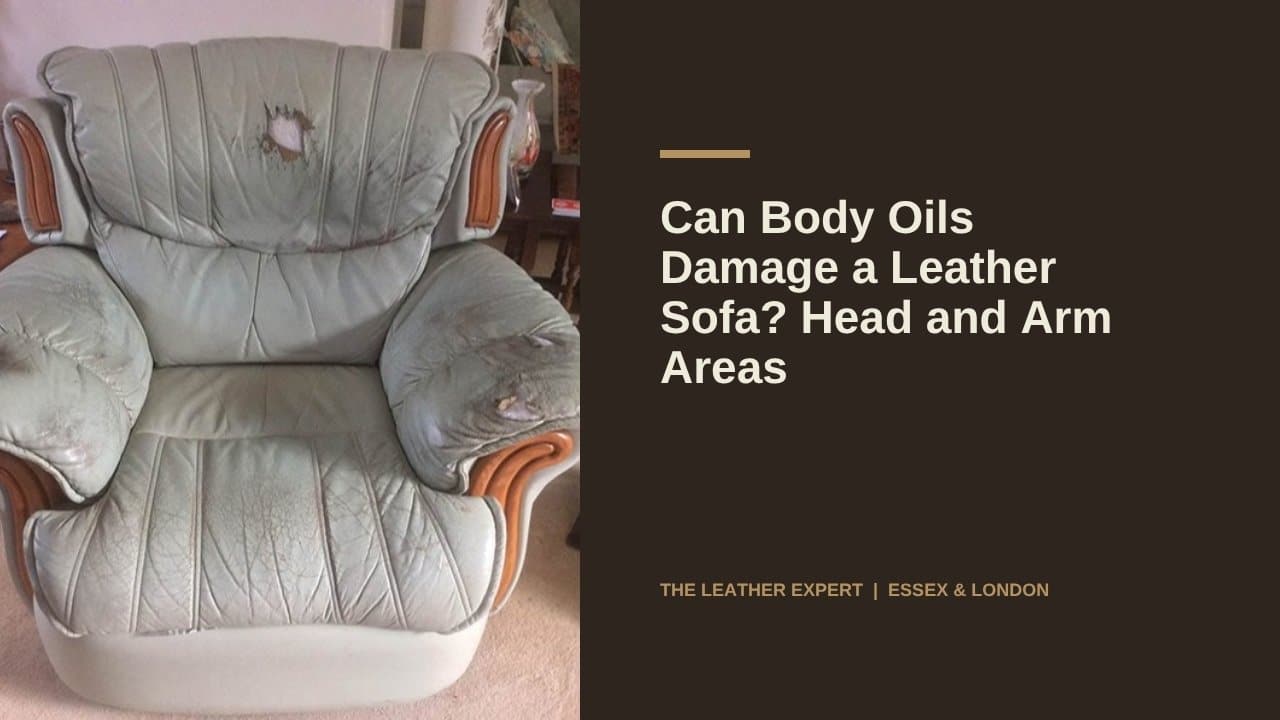
Yes, body oils damage a leather sofa, and they do it so slowly that most people do not notice until the headrest has turned into a dark, shiny patch that no amount of wiping will shift. It is one of the most common problems we are asked about at The Leather Expert, and it turns up on everything from a ten year old DFS recliner in Basildon to a near new Natuzzi corner suite in a flat in Canary Wharf. The good news is that in most cases it can be put right properly, as long as nobody has attacked it with the wrong products first.
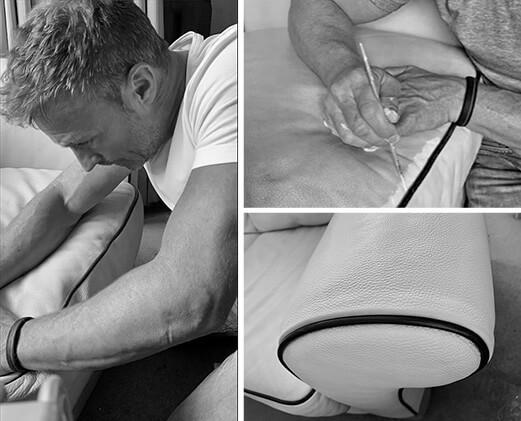
This post explains what is actually happening to the leather, why the usual home remedies tend to backfire, and what our leather head area restoration service involves when Jon comes out to look at it.
Why body oils damage a leather sofa in the first place
Most modern leather sofas are finished with a thin protective coating over the top of the hide. That coating is what gives the sofa its even colour and its wipe clean surface. It is tough against day to day dirt, but it is not designed to sit under a warm, slightly greasy head for two hours every evening for years on end.
Skin produces natural oils all the time. Add hair products, moisturiser, sun cream in the summer and the occasional bit of hair dye, and you have a steady supply of grease landing on the same few square inches of leather night after night. Warmth from your skin softens the finish just enough for that grease to work its way in. Over months and years it builds up in the coating and then into the leather underneath.
What you end up with is a patch that looks darker than the rest of the sofa, often with a slightly sticky or glossy feel. On lighter leathers, cream, stone, light grey and tan, it shows up as a grubby brown shadow. On darker leathers it tends to look like a shiny bald spot where the texture has flattened out. Either way, it is not dirt sitting on the surface. It is oil that has soaked into the material.
Where it shows up first
The headrest is the obvious one, particularly on recliners and high back sofas where the head sits in the same place every time. Jon, our founder, sees more damaged headrests than any other part of a sofa, and the worst ones are usually on the seat nearest the television.
Arm rests are a close second. Think about how you sit: forearms and hands rest on the arms, and hands carry oil, hand cream, crisps and whatever was on the steering wheel on the drive home. The front edge of the seat cushion, where the backs of the knees rest in shorts, and the inside of the arm where a child leans while watching a tablet, are also regular offenders.
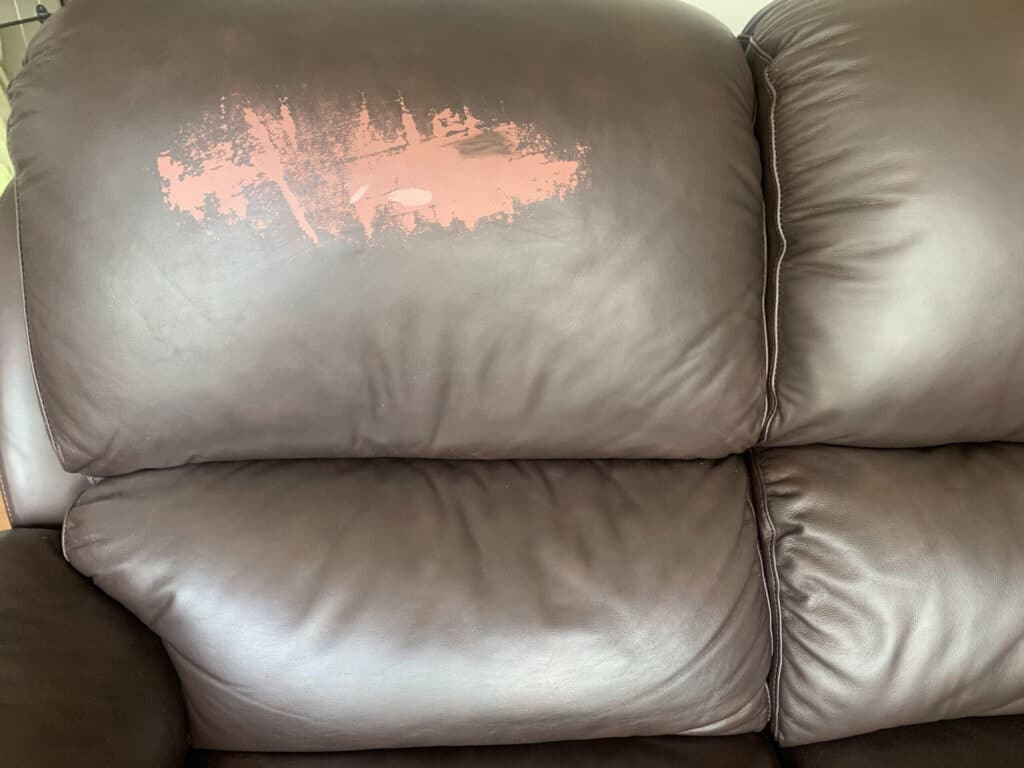
We also see it on the driver’s side of car seats and on office chairs, but on a domestic sofa the pattern is nearly always the same: one or two seats badly affected, the rest of the sofa looking fine. That contrast is usually what prompts the phone call, because a sofa that has aged evenly does not bother people the way a sofa with two dark heads and one clean seat does.
Why the damage gets worse if you leave it
Oil does not just discolour leather. It changes it. As grease builds up in the finish, the coating loses its grip on the hide underneath and starts to break down. The surface goes from slightly shiny to tacky, then the finish begins to crack and lift. At that point you are no longer dealing with a stain, you are dealing with a sofa that is losing its top coat.
On aniline and semi aniline leathers, which have little or no protective finish, the oil goes straight into the hide. These leathers darken quickly and the patch spreads outwards as the oil migrates. A tan aniline armchair from a shop in Leigh-on-Sea can develop a headrest the colour of strong tea within a couple of years of steady use.
The longer the oil sits there, the deeper it goes and the harder it is to draw back out. Body oils damage a leather sofa in stages, and each stage costs more to undo than the last. A patch that has been building for six months is a fairly straightforward job. One that has been there for six years, and has had a few rounds of enthusiastic scrubbing on top, takes a good deal more work.
What people try at home, and why it usually backfires
We understand the temptation. It looks like dirt, so surely a good clean will sort it. Unfortunately, most of what gets used on these patches does more harm than the oil itself.
Baby wipes and household cleaning sprays are the most common culprits. They contain solvents and detergents that strip the protective finish rather than the grease underneath it, which leaves the leather duller, more porous and even quicker to absorb the next lot of oil. Washing up liquid does something similar. Jon has lost count of the number of sofas where a customer has cleaned a dark patch and ended up with a pale, dry ring around a still dark centre.
Then there are the conditioners and leather feeds sold in supermarkets and car accessory shops. On an oil stain they are the wrong tool entirely, because you are adding more oil to a problem caused by oil. The patch goes darker and shinier, and the product gets into the surrounding leather as well. Olive oil and coconut oil, which we still see suggested online, are worse again. They go rancid inside the hide and leave a smell that is very difficult to get rid of.
Finally there is the scrubbing. Rubbing hard with a cloth or a soft brush generates heat, and heat drives oil deeper. It also polishes the surface, which is why a scrubbed patch often ends up glossier than when you started. Our advice is simple: leave it alone and get a professional to look at it.
How we restore a head or arm area professionally
A proper repair starts with an assessment. Jon needs to know what type of leather it is, how deep the oil has gone and whether the finish is still intact or has started to break down. That decides everything that follows. A pigmented leather with surface oil is treated quite differently from an aniline leather that has soaked it up like a sponge.
The first stage is a deep clean using products designed for leather, followed by a degreasing process that draws the oil back out of the material rather than pushing it around. This is the part that home cleaning cannot replicate, and it is often done in more than one round on heavily affected areas.
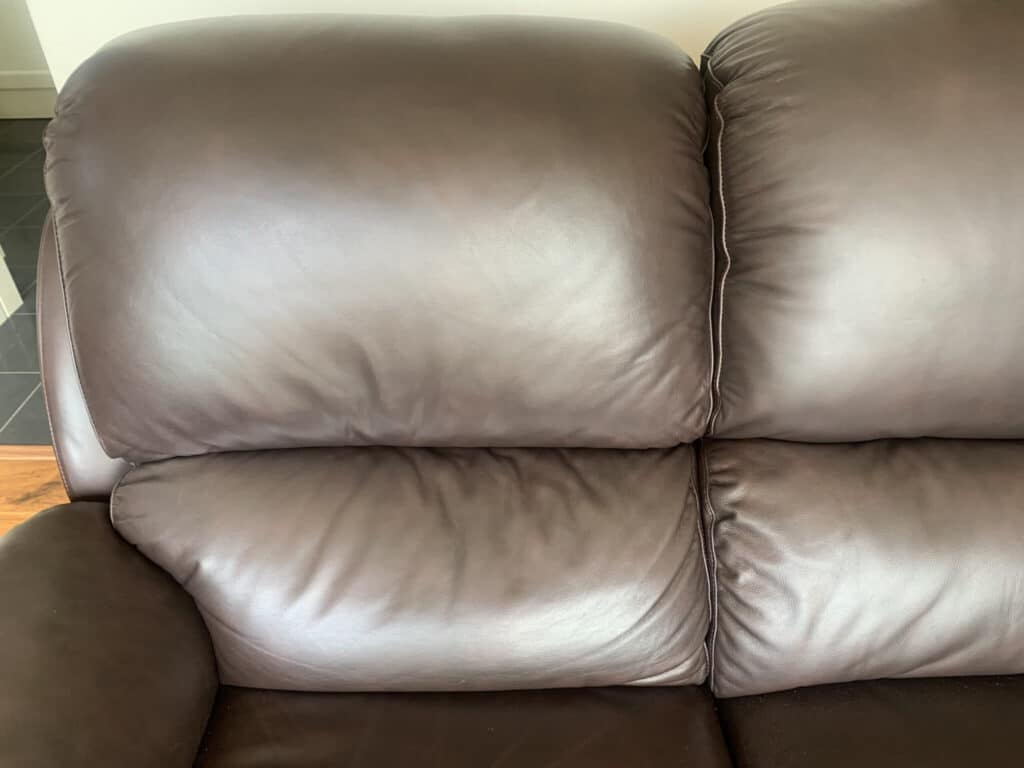
Once the leather is clean and dry, we assess what is left. On many sofas the darkened area has also worn through the colour, so the surface is prepared and the colour is rebuilt using pigments matched to the original. This is where experience matters most. Matching a fifteen year old cognac brown that has faded slightly across the rest of the sofa is not something you can do from a chart. Jon mixes the colour by eye against the existing leather so that the repaired headrest blends into the seat and back without a visible edge.
The final step is a new protective finish. This seals the colour, restores the correct sheen (matt, satin or gloss to match the rest of the sofa) and, importantly, gives the area a fresh barrier against the next few years of heads and hands. Where a sofa has been generally grubby as well as oil stained, we often recommend a full leather sofa cleaning at the same time so the restored areas sit against a clean background.
Can it always be saved?
Most of the time, yes. The exceptions are sofas where the oil has been there so long that the leather itself has gone soft and spongy, or where repeated cleaning has worn the hide thin. Bonded leather, which is a coated fabric rather than a real hide, also tends to fail rather than stain when it meets body oil, and there the honest answer is often that a panel needs replacing rather than restoring. Our wider leather restoration service covers those cases, and Jon will tell you straight if a repair is not worth the money.
Keeping it from coming back
Once an area has been restored and sealed, it will resist oil far better than the worn finish did, but no leather is immune, and body oils damage a leather sofa a little at a time whatever the finish. A washable throw or an arm cap over the most used seat makes a real difference, particularly if someone in the house uses hair oil or a lot of styling product. Wiping the headrest with a slightly damp, clean cloth once a week (water only, nothing else) lifts fresh oil before it has a chance to soak in.
It is also worth knowing what you have bought. The trade body Leather UK is a useful place to read about the different types of leather finish, because an unprotected aniline hide needs a different approach from a pigmented one, and the label on a sofa in a showroom does not always make that clear.
Radiators and sunny windows make things worse too. Heat keeps the finish soft and helps oil travel, so a recliner parked against a radiator in a Chelmsford front room will darken faster than the same sofa in a cooler spot. Turning cushions where the design allows spreads the wear as well.
Get a quote to restore an oil darkened headrest or arm
If your sofa has dark, shiny patches where heads and arms rest, send us a couple of photos, one from a distance and one close up in daylight, along with a rough idea of where you are. We work across Essex and London, from South Benfleet, Southend and Rayleigh through to Romford, Brentwood and the City, and most head area jobs are done at your home in a single visit.
Call Jon directly on 07967 216250 or fill in the enquiry form below this post. You can read more about the process on our leather head area restoration page. Every job is quoted individually, and quotes are free.